
Unknown's avatar

About David Joel Miller

David Miller is a California Licensed Marriage and Family Therapist, Clinical Counselor, faculty member at a local college, certified trainer and writer.

The novel that escaped

The novel that escaped.

By David Joel Miller, writer, blogger, and mental health professional.

Why my first novel isn’t my novel number one.

I planned to write a series of posts about the various books I have written and published. Starting this required me to look at when I first started work on my various books and how long it took me to complete them. There were many twists and turns in this process, and it’s not surprising that my memory has erased a few of those sudden turns of direction.

My first try at writing a novel happened in 2007.

I began experimenting with the idea of writing a novel in 2007. But then my life took a sudden detour when I started a new job, and writing that novel had to be put on hold. Eventually, I did finish that book, but through the years, that book has sat on my computer, lapsing into oblivion.

When I started writing this post, I was going to tell you about the first novel I published. But as I looked through my file folders, I discovered that more than one book had been started only to reach a certain number of words and then languish in the file folder forever.

Eventually, I’ll get around to writing a post about the first book I published, but I think it might be worth mentioning the first novel I wrote, which still hasn’t been published.

Writing the book “After the Sickness.”

My first effort at novel writing was a book with the working title “After the Sickness.” In high school, I was a big fan of dystopian novels, so it made sense to try to write a book with a different twist on dystopian novels. I came up with an idea that I thought was rather fantastic and probably difficult to believe, but because of my life experiences, I didn’t think it was that far-fetched.

Like most of my books, this book included a lot of knowledge and experience from my own life. I’ve worked in pet shops, raised various animals, and been a lifelong pet owner. I had seen several outbreaks of avian diseases in flocks of pet birds. There was a time when the Newcastle virus was in the news repeatedly.

The premise I came up with was a “what if?” question. What would happen if a bird disease found in flocks of birds mutated to the point that it began to infect other species of animals? In my novel, wild birds started dying at a horrendous rate. That led scavengers such as mice and rats to feed on these carcasses. Eventually, the disease spread to humans, and people began to die so quickly that medical services and emergency responses broke down.

In my version of the disaster, people had to escape the cities and large concentrations of population, so the heroes and heroines in the book flee into the desert Southwest and live in old, abandoned Anastasi and Pueblo structures.

Part of me wishes I had published “After the Sickness.”

Maybe it’s too late now for that dystopian scenario to be scary. This may be another time when the boundary between fact and fiction becomes blurry. I had completely forgotten about that first dystopian novel until the outbreak of avian influenza, and then its migration from cows to humans began appearing on the nightly news.

My second attempt at a dystopian novel.

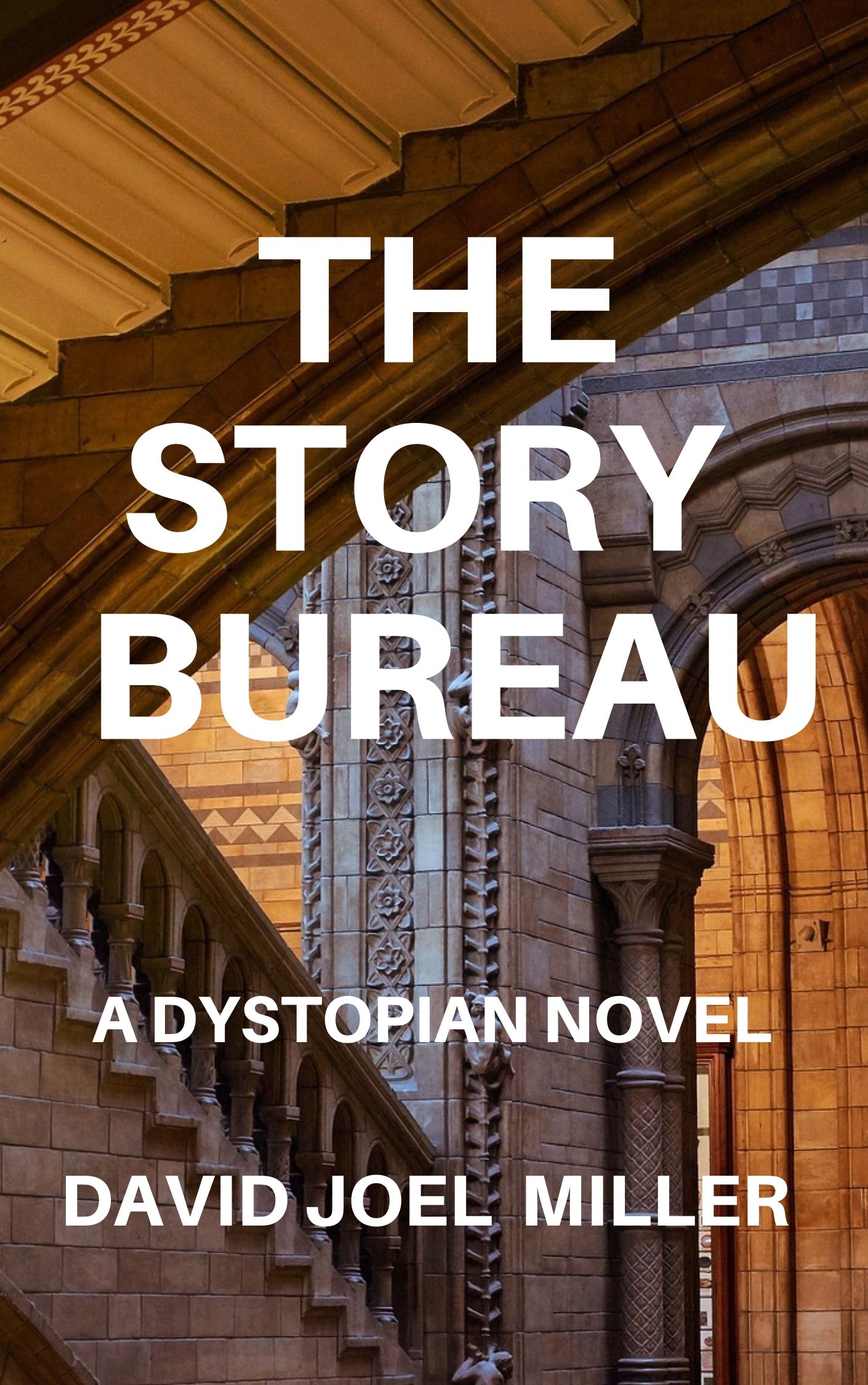
While that first dystopian novel never got published, in 2019, I finally published another dystopian scenario. That second book, Story Bureau,” seemed farther from fact and more clearly fictional when I wrote and published it in 2019.

Story Bureau tells the details of a society in which a part of the government takes control of all news distribution and is tasked with ensuring that all the news published is favorable towards the government. In this tale, the Story Bureau receives initial news reports and converts fake news into true news stories, which are then fed through a government-controlled communication system.

I found writing Story Bureau much easier than writing After the Sickness. It’s fairly easy to believe a disease that starts in animals might spread to humans and kill millions of people. Still, I think it’s harder to believe that anyone in the government could try to control and slant news so that only stories that made them look good would reach the public.

On second thought, maybe the idea that a disease that originates in animals and then spreads to man and results in widespread human deaths may not have been too fanciful to be believed. Now, I’m wondering if I should try to salvage that story.

Those are my only two efforts at writing dystopian stories. I’ll tell you a little more about my other writing and learning to write, adventures in future posts.

Staying connected with David Joel Miller.

Seven David Joel Miller Books are available now! And more are on the way.

For these and my upcoming books, please visit my Author Page – David Joel Miller

Want the latest blog posts as they are published? Subscribe to this blog.

For more information about David Joel Miller’s work in mental health, please visit the counselorssoapbox.com website.

For my videos on mental health, substance abuse, and having a happy life, please see Counselorssoapbox YouTube Video Channel

The difference between a writer, an author, and a novelist

The difference between a writer, an author, and a novelist.
Photo courtesy of Pixabay.com

The difference between a writer, an author, and a novelist.

By David Joel Miller, writer, author, blogger, and mental health professional.

Are there differences between a writer, an author, and a novelist?

I think there are. The first two activities, writing and blogging, both philosophically and practically, require different skills. Blogging, in my opinion, is writing a topical essay. I suppose it’s possible to write a blog that includes only short stories or excerpts from other writing. Still, the moment you begin to try to discuss what you’ve written or describe your process, you move from telling a story to discussing a topic.

Writing and similar creative processes are for sharing.

The term writing is getting a little confusing. I suppose it started with any effort to record something in a medium that could be referred to later. Cave paintings may be either art or writing, depending on your point of view. Cuneiform on clay tablets, hand-drawn characters on parchment or skins were other ways of keeping track of information for later reference.

Today, I think the word writing can refer to any number of ways of creating something meant to be consumed later by others. Most of my writing, whether nonfiction, blog posts, or novels, is dictated. Even videos and movies usually begin as a written script that is transformed into a sound-with-picture format. I listen to quite a few podcasts, some of which include PowerPoints or other visuals. These media mix the skill of writing with other forms of communication.

I’m inclined to be generous and consider any of these efforts to convey information or a point of view or to entertain as falling under the heading of writing. The videos for my YouTube channel (Counselorssoapbox YouTube Video Channel) usually start with a written outline and progress from there. But I think the other two terms, blogger and novelist, refer to some very specific types of writing.

My first blog was counselorssoapbox.com

At the beginning of my writing journey, I wrote exclusively for my blog. That blog, counselorssoapbox.com, continues to inhabit the Internet and I’m still writing articles for it. In the beginning, the blog was primarily technical, meant to describe particular mental health issues and to share the things I was learning in my journey with other counselors and therapists. Over time, I expanded that to include articles about positive psychology, having a happy life, and adjusting to all those transitions or bumps in the road of life.

The term novelist has a different meaning than the other two.

Now, for those of you who were brainwashed by your elementary school teachers who kept telling you to look it up in the dictionary, I would encourage you to double-check with them which dictionary they are using. People who want you to look up a word in the dictionary to find its meaning have things backward.

The way dictionaries were first made was to look at all the ways people used words in sentences, primarily written works or oral speeches, which were then printed, and based on all these different usages and their frequencies, the dictionary makers offered us a variety of meanings for each and every word. I fear that today’s search engines are limiting the ways in which we are allowed to use some words.

I have a wonderful old Dictionary and Cyclopedia published in eighteen ninety-eight and I enjoy looking up words in it. Most of those words have long lists of various meanings that have been attached to a given word. Remember that the English language keeps changing. In eighteen ninety-eight, there was no such thing as an allergy. In the nineteen thirties, when the AA big book was written, allergy was defined as an excessive reaction to something. I suppose, in theory, that could be either good or bad. Today, we mostly use the word allergy to mean an adverse reaction to something. And yes, I confess, on occasion, I still pull out a dictionary and look up an unknown question word.

The dictionary definition of a writer is relatively simple.

A writer is someone who writes things down. In modern usage, we commonly think of this as somebody who writes things down as an occupation and expects to be paid for their work or as an artist who writes for their own pleasure. But those writings aren’t necessarily meant for other people’s consumption. And what they write can be purely utilitarian, like the instruction booklets that accompany almost everything you buy these days. The primary function is to give you something to either lose or throw away.

I think writing blog posts and their close cousins, short videos and shorter shorts, not the wearable kind though, are also important functions of writers.

So, how is that different from being an author?

I think that authors all began as writers. They want to record something. The largest difference is that authors primarily write things they expect others to read. Usually, when I think of an author, I think of someone who has written either a long scholarly dissertation, journal article, or they have written a book-length manuscript.

I think you cross the bridge from being a writer to being an author when you publish the work and send it out into the world for others to read. Authors who have written books and articles primarily seek to inform or entertain.

What’s different about a novelist?

A novelist sets out to write an amazing thing called a story. In its simplest form, the story is the tale of how someone did something. We believe that humans, and possibly other species, have been telling stories to distill experience and illustrate how one should live for millennia. Some stories are cautionary, such as don’t do this, or you will be punished, while others are longer tales that illustrate all the varieties of being.

Novelists don’t always get the respect that other writers and authors are given. I suppose it is because novelists seek to convey information by telling an enjoyable story. It certainly is more fun to have fun than to simply be lectured about dull facts.

I think that, eventually, all writers aspire to cross the bridge to become published authors. And those who seek to tell stories either write short stories or become novelists. Some nonfiction works also read more like fiction because of their characterization and details. Biographies, memoirs, historical accounts, and similar nonfiction works are much more enjoyable to read when they tell us a story.

Have I put you to sleep yet?

The idea for this post started with a conversation with a family member when I drew a distinction between being a writer and being an author. Something I felt I had crossed when my first book became available on Amazon. Any thoughts about the way we use these words? Do you have any thoughts on the topic you’d like to share? Please feel free to leave a comment or to use the Contact Me feature.

Staying connected with David Joel Miller.

Seven David Joel Miller Books are available now! And more are on the way.

For these and my upcoming books, please visit my Author Page – David Joel Miller

Want the latest blog posts as they are published? Subscribe to this blog.

For more information about David Joel Miller’s work in mental health, please visit the counselorssoapbox.com website.

For my videos on mental health, substance abuse, and having a happy life, please see Counselorssoapbox YouTube Video Channel
Those confounded animals

Tina my Writing Cat

Those confounded animals.

By David Joel Miller, writer, blogger, and mental health professional.

How come animals keep wandering into all my novels?

I’m working on my newest novel, and it suddenly occurred to me that another animal had wandered into my work in progress. This shouldn’t surprise me, considering the prominent role that animals have played in my life. Still, it occurred to me that inserting various species into my novels has not been a conscious choice.

Most of my life, animals have been in my house.

Some of you know my life story, at least the abbreviated version. I was born and lived the early part of my life in the Midwest, Michigan and Indiana, to be precise. I know we had a dog in the family, but that was more my parent’s animal than mine, and somehow, that creature stayed behind when we made the pilgrimage to California.

I arrived in California just in time to spend my teenage years, the 1960s, in a rural agricultural area amid apricot and prune orchards, which has since transformed into an area for growing semiconductors known as Silicon Valley.

From the very beginning, our home always had some type of pet. When my wife and I first married, we inherited the family dogs from both our families, and for the next 50 years, more or less, we always had an animal in the house.

Without a pet, the house was empty.

That cycle was finally broken between 2017 and 2018 when the last two non-human members of my household passed away. January of 2018 marked my retirement at the young age of 70. That was also the year that saw my first two books published. While the house seemed empty, I was busy adjusting to being retired and some of the many challenges that came with speeding past the milestone marking 70 years on earth. I wasn’t expecting animals to creep back into my abode.

My unconscious seems to have had a different opinion.

Somehow, without my conscious intention, an animal made its way into my very first novel. That novel, Casino Robbery, certainly drew on some of my own life experiences. I don’t think I ever thought about whether or not to include a pet in the story, but it seemed to naturally spring from the novel’s plot.

Early in the storyline, the protagonist, Arthur Mitchell, a mild-mannered accountant working at a Las Vegas casino, witnesses a robbery in which his fiancée is killed. Arthur proceeds to adopt her dog, a black Labrador named Plutus. Somehow, Plutus not only snuck into a couple of scenes in that novel but also became a regular cast member for Casino Robbery and the two succeeding Arthur Mitchell Mysteries.

Then, in Letters from the Dead, a cat shows up.

That Plutus would make friends with a cat seemed only natural. So somehow Plutus got Aspen, the cat, an audition, and on the story goes.

Hotel Hauntings includes both a dog and a cat.

Hotel Hauntings is the working title for one of the books in the Paranormal News series. Like most of my other books, the title may change when it comes time to publish. This series of books features Nancy Nusbaum, who first appeared in a time travel adventure titled Sasquatch Attacks.

In this book, Nancy encounters both a dog and a cat. I won’t give you their names now because that might change in the final editing stage. And I don’t want to spoil the book for you, but I can tell you one thing. In this book, Nancy investigates reports of ghosts at the Oaktree Hotel. One of the things she needs to discover is if dogs and cats can see ghosts, which also raises the question of whether animals who pass can also haunt a property.

Those aren’t the only animals in my books.

If you read my other books carefully, you’ll find that animals, mostly pets, get cast in various roles just like humans. So, if you go on an animal hunt in my books and have a particular favorite, please leave a comment. Just be careful not to spoil the story for someone else.

In honor of those various animal cast members, I periodically make one of the David Joe Miller books free for a day or two. So, if you’d like to catch that offer, please subscribe to this blog and make sure to read the periodic posts.

The COVID pandemic has affected Pets also.

Over the last four years, I have put off bringing home another non-human family member because of all the changes in my life. Too many changes were happening in my life to feel that I could be responsible for a dog or a cat. Recently, my subconscious has been arguing with that logic. Several nights, I had a dream about adopting, and not surprisingly, several people asked me when I would be getting another creature.

Recently I decided that the time was right to adopt another family member. With the help of a friend, I made a trip to a local animal center. Apparently, I was not the only one struggling with that decision. The local animal center had quite a selection.

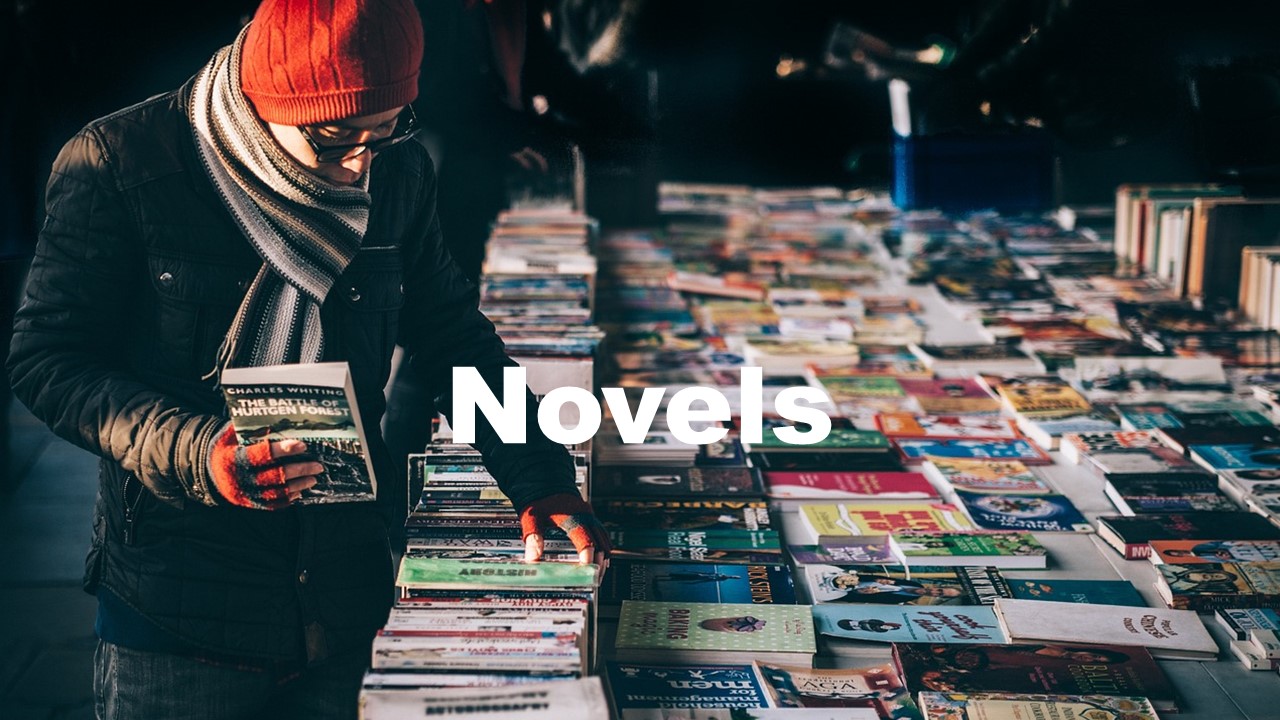
We interviewed several felines and were finally selected by one who appeared anxious to adopt us. The picture above is of Tina, my new writing partner.

Staying connected with David Joel Miller.

Seven David Joel Miller Books are available now! And more are on the way.

For these and my upcoming books, please visit my Author Page – David Joel Miller

Want the latest blog posts as they are published? Subscribe to this blog.

For more information about David Joel Miller’s work in mental health, please visit the counselorssoapbox.com website.

For my videos on mental health, substance abuse, and having a happy life, please see Counselorssoapbox YouTube Video Channel

A Therapist Writing Novels?

Novels
Photo courtesy of Pixabay.com

A Therapist Writing Novels?

By David Joel Miller, writer, blogger, and mental health professional.

Why did I start writing novels?

There are several reasons I shifted from writing blog posts and then writing a nonfiction self-help book to writing novels. I’m not sure there was a conscious decision here. In past blog posts, I’ve talked about how I got started writing a blog and how, after several years of writing that blog, I finally published my first book, a nonfiction book about adjustment disorders.

If I had known how difficult writing and publishing a book was, I might’ve been deterred from even starting on it. The process involved has a rather steep learning curve; unfortunately, I am still climbing that mountain. But this writer’s blog is designed to chronicle that journey from wanting to write to having written.

It definitely wasn’t for the money.

I know many people have the vision of writing a best-selling book and making lots of money. The truth is that for most people, it takes years to write that book and even more time to market it before you see any return. If you figure out what authors as a group make from writing and publishing books, what they are bringing home per hour is an incredibly small sum.

While I continue to hold onto the dream that one or more of my books will be somewhat successful, the reasons I’ve written them are largely non-financial.

Finishing a book involves more than just writing more pages.

A good part of my journey toward writing was divided between studying the art and science of writing and publishing and the time I spent putting words to paper. Learning how to create a book someone might want to read is one task. Turning that manuscript into a tangible product that someone can read is an entirely different matter.

In the interest of full disclosure, I should say that when I refer to writing, I’m referring to dictating. Initially, I spent a lot of time “pounding the keys. As a result, I developed carpal tunnel syndrome. Out of necessity, I learned to dictate, which is another skill altogether and beyond the scope of this article.

Maybe I should blame it on a famous writing coach.

While finishing up that first nonfiction book, I came across some articles by a well-known writing coach talking about writing both fiction and nonfiction at the same time. Inspired by those articles, I planned to produce two series of books. One series would be my nonfiction self-help books, and the other a series of novels. I won’t mention that writing coach’s name here since I wouldn’t want to blame them for all the errors I made in trying to carry out that plan. Why I decided to write a novel is the topic of this post.


I have always been an avid reader.

The short version of why I wanted to write a novel was that until I graduated from high school, I read a lot of fiction. Before the Internet, streaming, and even before the advent of most television programs, people entertained themselves by reading.

Once I entered the workforce, I read mostly nonfiction technical books. It took me a long time to return to reading novels, but to learn to write quality novels, I’ve returned to reading fiction, this time with different eyes.

I had always wanted to be a writer.

There was part of me that had always wanted to be a writer. Books were a big part of my life growing up. Being an only child and moving frequently, I read incessantly. The characters in the books were often my best friends.

Often, when you grow up around something, you think it is the career path you should take. I got discouraged from ever writing anything for anyone but myself early on. My poor vision and my even worse spelling meant that most of the feedback I got on my schoolwork was highly negative. And I definitely didn’t get much encouragement at home.

I always did a lot of daydreaming.

Daydreaming seems to be necessary for the creative process. I certainly didn’t know that when I was in elementary school, but I spent a lot of time all the way through high school sitting in class, basically zoned out while living out some fantastic daydream.

In the recesses of my mind, there was always some exciting adventure going on. I took the ideas from my classes and became the one building the railroad, finding a cure for a rare disease, or bringing peace and prosperity to some fictional country.

What I couldn’t do was translate those daydreams into anything tangible.

Small accomplishments drowned in the sea of negativity.

From this perspective of age, I recognize that there were some small academic successes in my early life. But the constant reminders of my errors and the lack of enthusiasm or encouragement from my family overshadowed those accomplishments. This is a hint for parents. Make sure that you catch your children doing something right. You don’t encourage achievement by pointing out all of the deficits. An occasional round of applause can inspire a child to move in a particular direction.

My poem gets published, and my play gets produced.

In elementary school, I wrote a poem that was published in the school paper. To me, it was just a matter of fact. I didn’t take it as anything special. I don’t recall any special praise from my teacher, and I’m not sure my parents ever acknowledged that poem. I didn’t try my hand at writing poetry again until high school.

I also tried writing a play that my church youth group produced. Looking back, it was probably an awful piece of literature, but the fact that they went to the effort of actually producing it should have meant something.

One thing creative people have to get used to is doing things for their own satisfaction. The critics are often harsh, and the round of applause is rare.

Writing fiction was one way to meet my need to be creative.

I always felt the need to be creative. During middle school and high school, I got involved in photography. The science of mixing chemicals in working in the darkroom was as much an attraction as the artistic part. Because, at that time, being a photographer was considered an occupation where I could earn a living, and writing was seen as a sure route to poverty, my photographic interest was encouraged.

I gave photography my best effort, but the combination of my poor eyesight and marginal social skills brought that career path to an early end.

Telling stories without revealing client details.

Once I began working in mental health as a counselor and therapist, I discovered the power of stories. One theory of counseling is called narrative therapy and is based on the idea that the stories we tell ourselves end up being our reality.

I knew there were stories I wanted to tell about how people struggle and overcome problems in their lives. I thought every day in the work I was doing and hoped that sharing some stories might encourage some people and be a fun way to engage my creativity.

As a therapist, confidentiality is one of the highest principles in our code of ethics. Without the client’s permission and short of the legal mandate, everything the client tells us stays confidential. My dilemma was how to explore some of the issues I saw people struggling with and the solutions they had found without violating their confidentiality.

The answer, of course, was to write a novel set in a different place in a different time with fictional characters and see how they struggle with their problems and the solutions they created.

In future blog posts, I’ll tell you about the process of creating those six novels and my plans for additional novels.

Staying connected with David Joel Miller.

Seven David Joel Miller Books are available now! And more are on the way.

For these and my upcoming books, please visit my Author Page – David Joel Miller

Want the latest blog posts as they are published? Subscribe to this blog.

For more information about David Joel Miller’s work in mental health, please visit the counselorssoapbox.com website.

For my videos on mental health, substance abuse, and having a happy life, please see Counselorssoapbox YouTube Video Channel
My Muse’s odd visits.

My Muse’s odd visits.
Photo courtesy of Pixabay.com

My Muse’s odd visits.

By David Joel Miller, writer, blogger, and mental health professional.

My Muse shows up at the oddest times.

Creative people, writers, in particular, are fond of talking about the Muse. Several of the more famous writers and writing coaches whose works I read describe their relationship with their Muse. I can’t say that my relationship with whatever that group of people who sparked my creativity should be called is anything like those descriptions I read in the writing textbooks. But I think, in all fairness, I should tell you a little bit about when the muse visits and how that connects with my writing and other creative endeavors.

The Muse frequently comes at inconvenient times.

I know the standard wisdom is that the best way to invite the Muse is to set a regular time for writing. My writing efforts, along with all my other endeavors, are more like binges than consistent behavior. Unfortunately, I have too many projects I want to work on, and something always gets pushed to the back burner.

My Muse likes to interrupt.

The Muse often visits when I’m working at my day job. I have learned to adapt to these sporadic visits. I know I need to stay focused on my day job. But once that idea pops into my head that what they’re describing would be a great twist for the novel I’m working on or that I should make a video about the problem they’re describing, it’s hard to get that thought out of my head and easy to lose my focus on what I am trying to do. The best solution I found for the Muse’s tendency to interrupt is to keep a pad close by and quickly write the idea down before it escapes.

The net result is that I have a large pile of notes on my desk, many of which make absolutely no sense when I read them after the Muse has come and gone.

My Muse doesn’t like my writing desk.

The Muse is much more likely to show up whenever I get up from my desk and decide to go somewhere else and do something else. One of my goals has been to become more physically active. This goal moved much higher up on my list of priorities after I had major surgery a couple of years ago. I try to walk 4 miles per day with my minimum effort set at 2 miles per day. I hope my neighbors can see in the window of my office late at night because I will keep walking up and down the hallway until I get that minimum 2 miles walked or midnight puts a stop to this foolishness.

My Muse’s preferred time to visit is when I am outside walking around. She is likely to start jabbering at me with a large number of possible ideas, and I’m trying to concentrate on walking around in large circles on my driveway and not falling down. I know walking is supposed to be an automatic habitual behavior, and for me, it usually is. But it’s hard to concentrate when the Muse is yelling in your ear. I could cope with this strange behavior on her part if you would at least stick to one subject, but she likes to suggest ideas for all kinds of unrelated creative projects. Frequently, I end up running into the house between laps around the driveway and writing those ideas on my notepad. The idea for this post started out just that way.

The Muse often brings a group of others with her.

If it were only me and the Muse, we could probably work this conflict out, but she likes to bring other people with her. As I’m completing the third lap around my large driveway, the Muse whispering in my left ear, my inner critic shows up and begins to jabber in my right ear. Frequently, he tries to talk me out of being creative and reminds me that I still have a lot of paperwork that I need to do. Of course, the spirit of cleanliness will show up about this time and remind me that I haven’t washed the breakfast dishes and the kitchen floor needs mopping. None of these other projects are things I can successfully farm out since I currently live alone.

The Muse likes to compete with my leisure time.

No matter how long I sit at the typewriter (computer) writing (dictating), the Muse doesn’t seem to want to interfere with my creativity. She does, however, come in for a visit whenever I put down the writing project and pick up one of the large stacks of books that sit on the shelf behind me, waiting to be read. It’s not that I find ideas for my writing in those books, but rather the Muse thinks I shouldn’t be allowed to enjoy reading and starts making all kinds of suggestions for totally unrelated creative projects.

So, what’s the best way to get the Muse to contribute to my creativity?

I found a couple of things that increase the probability of the Muse visiting. First, sitting down to write something every day, whether I have an idea or not. I don’t think the Muse likes to contribute to this process, but the minute I give up and go for a walk, she will show up and tell me all the things I should have written. If I rush back to the desk fast enough I can write them down before the thoughts escape.

Secondly, I find that she is more likely to show up whenever I am doing automatic, fast-thinking behaviors, like going for a walk, washing the breakfast dishes, or doing some other mundane chore. I believe that the Muse does not like to compete for my attention, so any activity that requires me to concentrate on something other than being creative discourages her visits. But any time I let my mind relax she’s likely to show up along with two or three of her friends who all want to talk to me at once. The hard part is filtering out the advice about writing from the advice about marketing and advertising.

If you have had a different experience with whatever the people are who show up and whisper to you about your creative projects, I would love to hear them. Please leave a comment below, or feel free to contact me using the contact form.

Best wishes. David Joel Miller.

Staying connected with David Joel Miller.

Seven David Joel Miller Books are available now! And more are on the way.

For these and my upcoming books, please visit my Author Page – David Joel Miller

Want the latest blog posts as they are published? Subscribe to this blog.

For more information about David Joel Miller’s work in mental health, please visit the counselorssoapbox.com website.

For my videos on mental health, substance abuse, and having a happy life, please see Counselorssoapbox YouTube Video Channel
How to read like a writer.

How to read like a writer
Photo courtesy of Pixabay.com

How to read like a writer.

By David Joel Miller, writer, blogger, and mental health professional.

Writers need to read widely.

As a beginning writer, I frequently saw the advice that I needed to read widely. I’ve really been trying. Honest. You would think that with all this isolation taking place the last few years because of COVID-19, we would all have had plenty of time to follow that advice. It didn’t work that way for me. Did you get it to work that way for you?

Reading widely has introduced me to many new authors and some very different writing styles. However, I’m not sure that’s really helped my writing. First of all, I’m trying to write in my own voice. When I say writing in my own voice, that’s both literally and figuratively. For me, writing means dictating.

While I thoroughly enjoyed reading a lot of these new-to-me authors and their unusual styles. But were it not for the high recommendations from writing coaches, these books are not the kind of thing I would usually read and, therefore, not the kind of thing I would normally write. Does that mean this was wasted time? I certainly hope not.

One thing I’ve learned to avoid is getting so caught up in enjoying the story that I stay up late at night finishing books, and when I’m done, I know how it ends, but I have not learned much about how the author did what they did.

I’ve also learned that I need to read deeply.

Reading deeply involves slow reading and really paying attention to the techniques the author uses. I rarely get that kind of insight the first time I read a book. Reading deeply means picking up the same book and reading it again. This time with different eyes. Once you know what will happen and how it will end, you can pay more attention to how the author creates the mood, the suspense, and all those other techniques that beginning writers need to learn.

Reading deeply also means reading multiple books by the same author. You don’t get the full sense of how J. K. Rawlings crafted her books by reading just one of them. I’m in the process of reading the entire series of Harry Potter books. And to really understand the techniques, I’ve had to read some of those books more than once.

Does that mean I will turn into another J. K. Rawlings? Definitely not. I don’t know that I could write the way she does, no matter how many years of study and how many drafts of the manuscript I would go through. And I’m quite sure that wouldn’t take me where I want to go as a writer. What I’m looking for are ways to improve what I write, not ways to write like someone else.

I have followed that same process with several other authors who write in totally different genres. The reading deeply process has taught me a lot about writing. Unfortunately, studying craft by studying other authors’ books reminds me of trying to become a basketball player by watching replays of a lot of Michael Jordan games. I may learn to recognize how people are doing what they do, but I still have to practice what I’m going to do repeatedly until I become better at doing what I do.

The challenge of reading both widely and deeply is that both activities consume a lot of time. Time that I’d also like to be spending writing and that I need to spend coping with my everyday life.

I’m also supposed to read a lot in my genre.

That’s another one of those things that’s harder than it looks. I’m not sure about the book I’m working on. What genre is it? I know I had the idea. I know it’s kind of like some other books I’ve read, but it’s also kind of different.

So I launched into a program of trying to read widely, hoping to snag the genre I’m after in this wider net. Unfortunately, selecting a genre is more like wading through the swamp than struggling with the two-edged sword. You can put your feet in a lot of places in your writing efforts along with all that reading and still not make much progress.

Reading widely and reading deeply are two very different things.

Staying connected with David Joel Miller.

Seven David Joel Miller Books are available now! And more are on the way.

For these and my upcoming books, please visit my Author Page – David Joel Miller

Want the latest blog posts as they are published? Subscribe to this blog.

For more information about David Joel Miller’s work in mental health, please visit the counselorssoapbox.com website.

For my videos on mental health, substance abuse, and having a happy life, please see Counselorssoapbox YouTube Video Channel

Lessons I learned from my first book.

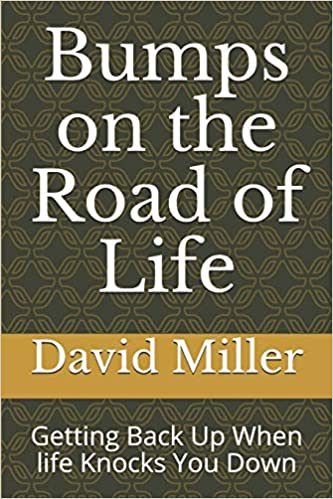
Bumps on the Road of Life.
My first book

Lessons I learned from my first book.

By David Joel Miller, writer, blogger, and mental health professional.

My first attempt at writing a book came after almost seven years of writing a blog. By that point, I thought I had pretty well worked out the process of coming up with an idea, creating an outline, and writing a section. Putting that all together and creating a book turned out to be far from the end of my writing journey.

My day job was working as a mental health counselor. Before that, I had worked as a substance use disorder counselor. I thought I had the topic of how to recover from life problems pretty well down. Transforming all those blog posts, along with some additional content, into a book proved to be a much larger challenge than I had anticipated. Here are some of the lessons I had to learn because of this endeavor.

You need to be clear who your audience is.

I tried to write my first book for as broad an audience as possible. The result was a book that didn’t quite meet the needs of anyone. My topic was bouncing back from adversity, a diagnosis professionals label as an adjustment disorder, hence the name Bumps on The Road of Life.

I had been told that self-help books were primarily purchased by women. That’s consistent with the way things have been in the past. Traditionally, men avoided going to therapy, thinking they could tough it out and that effort and toughness would get them through life’s problems. It’s also true that 2/3 of the people who get many diagnoses are women. The majority of therapists have historically also been women.

Over the last 20 years, I’ve seen a huge increase in the number of men who have come for counseling and therapy. I’ve also seen a somewhat smaller increase in the number of male counselors and therapists.

These life problems, such as career counseling issues, draw people to life coaches. (In the interest of full disclosure, I should mention that I went ahead and got certified as a life coach in addition to being licensed as both a Marriage and Family Therapist and a Licensed Professional Clinical Counselor.) Since I also do clinical supervision and train new interns and associates, I also included some of the more technical material, hoping it would help them work with clients with adjustment disorders.

Somewhere in a business text, I read that if you make a product designed for everyone, no one will buy it. This is certainly true of writing a book intended for everyone. So, maybe one of these days, when I have some spare time, I’ll do a revised second edition of that first book or perhaps write a new book with a different title. But, for now, I’ve put the Kindle edition on sale and moved on with my other writing endeavors.

Two drafts of a book are not enough.

I put that first book together by taking all my blog posts, rearranging them, and filling in the gaps. Then, I gave it to a few friends and colleagues and asked their opinions. I got a lot of useful suggestions and completed the second draft.

Unfortunately, that’s where I stopped. After two drafts and some proofreading, I pressed the button on publish and completed that first book just days before my 70th birthday and my retirement. While that met my life goal of writing and publishing a book, I now know it could have been significantly better if I’d spent more time polishing and revising.

You need to use beta readers.

Sometimes, you get so close to what you’re working on that you can’t see the big picture. That’s especially true in writing a book. The few readers I had asked to read my first two books made suggestions that significantly improved the final result. However, as I began to get more feedback from the copies sold, I learned that there were confusing parts and plenty of room for improvement.

Beta readers are probably even more critical when it comes to writing novels. People read fiction for fun, and many people have very specific tastes. For a book to find its audience, it must fit into people’s expectations for their favorite genre.

I’m not saying that the best books are written strictly to a formula. I’ve been reading fiction for fun ever since the 3rd grade. It’s nice to have some twists and turns. But people who read romance novels want a happily ever after, and people who read a mystery want the protagonist to solve that mystery.

Beta readers catch things that aren’t necessarily wrong. They just don’t fit in with the rest of the story. It upsets readers when I describe a mystery in the early chapters, and then suddenly, it’s all solved at the end of the book. I know why it happened that way, but maybe I haven’t gotten it down on paper in a way that makes sense to my reader.

It takes more than one proofreading pass to catch errors.

It’s hard to catch your errors. Reading and rereading something doesn’t mean you’ll spot all your mistakes. After a while, your brain starts seeing what you want on the page, not what’s there. Even having one person proofread doesn’t mean you’ll catch all the errors. I’ve also learned that first drafts are often riddled with errors. My goal is to get what’s in my head down on paper.

When there are many errors, even the automated programs don’t catch them all. I’ve run a chapter through a spelling and grammar check and made the corrections only to find that correcting one thing in a sentence created a second error.

Sometimes, ears work better than eyes.

Reading out loud can help catch spelling and grammar errors, but it can also help spot inconsistencies. For example, the character I had in chapter one with the gorgeous long blonde hair somehow was sporting an Afro later in the book.

The biggest lesson of all?

Writing a readable novel involves more than simply imagining a story in your head and getting it all down on paper. My take on this is that writing is both an art and a craft. No matter how unique and exciting the story is, it won’t hold the reader’s attention if it’s not told well.

Over the last four years, we’ve all had to adjust to the pandemic and changes in technology. I spent as much time as possible trying to keep up. The result was that I took a lot of classes on how to create things but didn’t spend the time I wanted to on writing the books I had started.

I’m making 2024 a year to rekindle my creative endeavors.

Staying connected with David Joel Miller.

Seven David Joel Miller Books are available now! And more are on the way.

For these and my upcoming books, please visit my Author Page – David Joel Miller

Want the latest blog posts as they are published? Subscribe to this blog.

For more information about David Joel Miller’s work in mental health, please visit the counselorssoapbox.com website.

For my videos on mental health, substance abuse, and having a happy life, please see Counselorssoapbox YouTube Video Channel

Decisions writers make once their book is written

Decisions writers make once their book is written.
Photo courtesy of Pixabay.com

Decisions writers make once their book is written.

By David Joel Miller, writer, blogger, and mental health professional.

Decisions you must make once you finish your manuscript.

You have finished your manuscript, which is probably a first draft, and now you must make a lot of decisions. Frankly, you could have made some of these before you wrote a book, but unless you are well along your journey to becoming a writer, publisher, and entrepreneur, you probably won’t do that. I know I didn’t. I will walk you through the decisions I had to make and some of the lessons I learned.

Why did I write this book?

Unless you’re doing write-to-market or someone else presented you with an idea, you probably got an idea and went to work on writing your book. Now, you must ask yourself why you wrote this particular book and what you will do with it now that you have it.

If you wrote it because you felt you had something you needed to say, you probably want to get the maximum number of people to read it. If you are hoping to make money, maybe even make a living by writing, you need to look at what will be most profitable.

If you go on to write a second book, you will probably have a much clearer idea of the intended readers. The more refined your idea, the better your chances that this book will accomplish what you set out to do.

What do you intend to do with this book?

Not having a clear idea of your objectives results in people writing books that end up in drawers, never to see the light of day again. Writing a book about yourself or your problems can be very therapeutic. A lot of self-help books start that way. Most of them aren’t things that should be shared with anyone else. Writing an epic novel can be a lot of fun. Many books began with the author putting their daydreams down on paper. But now what?

If you decide to share this with others, you move from being a writer to taking on the many other responsibilities of getting your book ready for others to read.

Will you run off a half-dozen copies of your memoir and hand them out to family and friends? Or will you try to get your book in front of a wider audience?

All these decisions I will give you aren’t always made in this order, but eventually, you’ll have to think about these things. I know I did.

Should you Self-publish or submit to a traditional publisher?

Will you go looking for an agent or publisher? Or are you going to self-publish? If you hadn’t thought those things through before you started writing, you had better do it now.

Both have their advantages. If you find an agent or a publisher, they can do much of the work for you. They can also prevent you from making a lot of serious mistakes.

Submitting your book to a publisher or agent includes a high risk of rejection. Even if you get it accepted, unless you sell a lot of books, you won’t see much money. But you will have the publisher helping you through the process of getting your book out there.

One warning here. Paying a publisher to get your book printed usually results in spending a lot of money and ending up with a garage full of books. Real, legitimate publishers will pay for the expenses if they expect to sell some books and reject it if they don’t. People who charge you to print your book plan to make their money off you, and whether you ever do anything with the books is not their problem. I suppose there are some exceptions to this, but bad experiences are so common I cannot encourage that route.

I decided to do the self-publish route.

I finished my first nonfiction book shortly before I turned seventy. I wanted to say that I had achieved my goal of writing a book and seeing it published. I wasn’t sure I would have it in me to write more books. Looking back, I wish I had done things a little differently, but I’ll share those challenges with you.

If you decide to go the self-publish route, even with the help of one of the major platforms, you will be wearing one, two, or maybe even a dozen hats in addition to being a writer. Each function you will have to perform has a learning curve. I found some of those curves as steep as climbing a shared granite wall. But I’m still climbing.

So, are you ready to become a published author?

If you reach this point, you have finished your manuscript, decided you wanted to get it out in the world, and probably have decided to self-publish your book. You’re now ready to move from the art of being a writer to the business of being a published author.

Staying connected with David Joel Miller.

Seven David Joel Miller Books are available now! And more are on the way.

For these and my upcoming books, please visit my Author Page – David Joel Miller

Want the latest blog posts as they are published? Subscribe to this blog.

For more information about David Joel Miller’s work in mental health, please visit the counselorssoapbox.com website.

For my videos on mental health, substance abuse, and having a happy life, please see Counselorssoapbox YouTube Video Channel

Becoming a Book Publisher.

Becoming a book publisher.
Photo courtesy of Pixabay.com

Becoming a Book Publisher.

By David Joel Miller, writer, blogger, and mental health professional.

Seeing my first book in print.

Once I had completed my manuscript and printed a couple of copies for friends to read, I thought the road to launching that book into the world would be easier. There were a whole lot of challenges to navigate. Had I known how much was involved, I might not have begun this journey of writing books.

Some of those challenges turned out to be logistical, and some had to do with technology. Technology is one of those creatures I love to hate. Without all this modern technology, self-publishing would have been impossible or out of my price range. But technology also involves a learning curve that, to my old, tired eyes, looks like scaling a vertical wall.

Let me walk you through some of the decisions I had to make and the technologies they had to study. I won’t presume to say master, but I did make them all work, sometimes, at least partially, the way they were supposed to.

Do things yourself or hire people?

You can do, by yourself, all of the tasks needed to turn your manuscript into a finished book and make it available for readers to purchase. You can also contract these tasks out to others. Which do you have more of time or money? I can’t say I had a whole lot of either.

If you’re like me and love learning, you probably want to do as much as possible yourself. I also didn’t have a lot of money to commit to hiring people to do things.

A title for my publishing company.

Picking a name for my publishing company turned out to be one of the easiest choices I had to make. Since I was electing to self-publish, I could pick pretty much any name I wanted as long as it wasn’t already in use and I didn’t include someone else’s name.

I came up with the name “Portal Publishing” with the idea in mind that I wanted my books to transport readers to somewhere they hadn’t been before.

Titles for my books.

As I began each book, a title would occur to me. So, that is the title on the file where all my notes and early drafts reside. My first book was a nonfiction book. If I ever publish a second edition, it will get a new title.

With my second book, I shifted to writing novels, and my experience with titles in the fiction area has been quite different. That book started out with one title, but when I got it complete, the original title didn’t quite fit, and I hastily retitled it just before I pushed the self-publish button.

When I say my first book, my second book, and so on, I’m talking about the ones I ended up publishing. I would estimate there are another 6 to 10 books that either didn’t get completed or, once I finished them, I didn’t feel they were good enough to publish. Someday, maybe, I’ll take those unfinished and unpublished drafts and run them through the process of revising and editing and see if there’s something there worth publishing.

While the titles worked for me while I was writing and publishing the books, they’re probably not the best for selling them. One lesson I learned from this was that I should have taken more time and picked titles that reflected their genre and that would attract readers.

Creating covers.

For my nonfiction book Bumps on The Road Of Life, I used the cover creator program in KDP for the paperback edition. When it came time to upload the reformatted book for the Kindle edition, I couldn’t figure out how to reuse the cover that was on the paperback. So, I launched into learning to use Canva to create my own covers. It worked exceptionally well, and I could make it work quickly enough to use it for several more of my covers.

Mastering the mechanical part of creating a cover was quite challenging. However, that process has gotten easier to use the more I’ve done it. And, of course, all the technology has improved over the years between my first book, published in 2017, and now.

There’s a vast difference between creating a cover and creating a good one. I’m firmly convinced all my books would sell better with professional covers. Having covers that match the genre of your book is a necessity if you want your book to sell well.

Formatting manuscripts twice.

Formatting a book for publication is another specialized skill. I quickly learned that it needed to be formatted differently for e-book readers, which needs to flow, than the way it should be formatted for paperbacks. This means that every book I published had to be reformatted multiple times.

Another formatting wrinkle here. Each edition needs to have the front and back matter updated, and any links in the books must be revised. If you want to publish wide, meaning with more than one publisher, you’ll have to revise that back matter and create separate editions for each publishing company.

Writing blurbs.

There’s an art to writing good blurbs. Unfortunately, it takes time to master blurb writing. I’ve taken several classes on writing blurbs and other advertising copy, but if you want to do this well, you’ll need more training than an hour or two of webinars.

Writing back copy.

Like blurbs, learning to write back copy is another skill to master. While these two and other instances of writing advertising copy are related, they’re not identical.

Uploading manuscripts.

Uploading manuscripts to various publishers was also a time-consuming activity. In addition, different publishers have different platforms. Had I continued to publish wide, I could easily have justified paying someone else to format and maintain my books on the various platforms.

Two reasons I discontinued my effort to publish wide.

There’s a huge learning curve with each platform your books are available on. For someone like me who has a full-time job and some other things in my life that require my attention, I needed to spend more time focused on my writing and less on the mechanics of getting my book in front of potential buyers.

I also discovered that a significant portion of my book sales came from books I had listed exclusively on KDP. So, it made sense to me to have all my books available in Kindle Unlimited.

Getting people to buy the book.

It’s a great feeling to have written and published a book. I still remember the first time I sold a copy. I also remember when a student in one of my classes brought in a paperback copy of one of my books and wanted it autographed. Reaching that point is a baby step on the journey to being an author with a following.

I know I’ve covered a lot of topics in this brief series of posts. If you have questions or comments, don’t hesitate to contact me.

Having just had my 76th birthday, I’m conscious that there will never be enough time to do everything I want to do. But I’m certainly not done with my writing journey. Thank you for sharing this adventure called life with me.

This post is a revised post that was first published on 2/7/23. Stay tuned for some additional material from the past and many new blog posts about what I’m working on currently.

Staying connected with David Joel Miller.

Seven David Joel Miller Books are available now! And more are on the way.

For these and my upcoming books, please visit my Author Page – David Joel Miller

Want the latest blog posts as they are published? Subscribe to this blog.

For more information about David Joel Miller’s work in mental health, please visit the counselorssoapbox.com website.

For my videos on mental health, substance abuse, and having a happy life, please see Counselorssoapbox YouTube Video Channel

Writers start by learning to read.

Writers start by learning to read.
Photo courtesy of Pixabay.com

Writers start by learning to read.

By David Joel Miller, writer, blogger, and mental health professional.

Writers are usually voracious readers.

One of the reasons that I had always wanted to write a book was that I had been a lifelong learner and a voracious reader. But my becoming an enthusiastic reader almost didn’t happen.

I’m not one of those people who fell in love with books in kindergarten or even the first grade. We moved around frequently, often in the middle of the school year. So, my memories of those early years are fragmented and probably inaccurate. I’m sure we had textbooks in the schools I attended, but it seemed to me that by the time I got issued a textbook, it was time to turn it in and move to the next town and the next school.

I don’t remember there being many books in our home, at least nothing that would’ve been age or grade-appropriate for me. My parents had planned to be missionaries, and my father had briefly attended seminary with the idea of becoming a pastor. We always had a Bible in the home. I also remember us having a commentary on one of the Gospels and a small handbook on learning Greek. None of these were particularly interesting to me, nor did they encourage me to take up reading.

My interest in books began quite by accident.

I remember our class going to visit the school library. I think it was the fourth-grade level; I really can’t be sure. I wasn’t familiar with reading books for pleasure. Each member of the class was supposed to look around the library and choose one book they wanted to check out to take home and read. Most of my classmates picked their book right away. I hadn’t a clue how to select a book.

After waiting for me for quite some time, the teacher lost her patience. Finally, in frustration, my teacher reached over onto one of the shelves, pulled out a book, and handed it to me. I can’t be sure whether she knew what the book was and selected it because she thought it would interest me, because it interested her, or her selection was purely a random gesture.

Suddenly, I was hooked on reading.

I remember quite clearly that that book was one of the Laura Ingalls Wilder Little House on the Prairie series. I read it alone in my bedroom, filling the hours during that time before a television made its appearance. Reading, rather than playing with other kids, finished off a book in short order. After finishing that book, I went back to the library every chance I got, reading all of that series and then exploring many others.

I do remember reading continually in elementary school and then in middle school. The frequent moves and the comings and goings of the few friends I made meant no one was in my life for very long. Being an only child with two parents who had their own emotional issues, I spent my childhood largely alone. My constant companions were the books I read.

Daydreaming is an important part of the creative process.

I recently came across an idea recently while listening to a podcast about writing that a major part of creating a fictional story involves putting together the plot. Whether you’re a hardcore outliner or the pantser type of discovery writer, it’s important to be able to imagine exciting things that will take place in your story. Daydreaming about your characters, the setting, and the events that will happen is a valuable part of the process of creating a readable novel.

I didn’t know that back in my high school days. What I did know was that I quickly lost interest in many of my classes. A considerable part of my time in class was spent daydreaming. I created a phenomenal number of adventures for the characters that inhabited my head. As with most creative people, the characters are in some respects reflections of myself, but in a great many other respects, they are the people I wish I were rather than the person I am.

What the writer part of me needs to learn to do is to hold onto those daydreams long enough to get them down on paper and create a first draft of the story I’m telling myself in my head that I can share with other people.

Reading widely is useful for writers, but it’s not enough.

When I began trying to craft novels, I discovered that all those books I had read, hundreds of fiction and also hundreds or more nonfiction books, still didn’t give me the skills I needed to write my own books.

Enjoying the daydreams of another author is a far cry from creating and recording your dreams in a form that someone else would want to read. So, in an upcoming post, I want to discuss the difference between how readers typically read and writers should be reading.

I hope you are enjoying some of these posts on creativity and my writing journey. Eventually, we’ll get to the point where I talk about the books I’ve written and the ones still in my head waiting to be written. If you enjoy these posts, please like them. If you’d like to find out what the next installment of this story brings, please subscribe to this blog. Thanks for reading.

This is a revised version of a post originally published on 12/13/22. Stay tuned for some new posts about writing and my writing projects.

Staying connected with David Joel Miller.

Seven David Joel Miller Books are available now! And more are on the way.

For these and my upcoming books, please visit my Author Page – David Joel Miller

Want the latest blog posts as they are published? Subscribe to this blog.

For more information about David Joel Miller’s work in mental health, please visit the counselorssoapbox.com website.

For my videos on mental health, substance abuse, and having a happy life, please see Counselorssoapbox YouTube Video Channel