

The difference between a writer, an author, and a novelist

The difference between a writer, an author, and a novelist.
Photo courtesy of Pixabay.com

The difference between a writer, an author, and a novelist.

By David Joel Miller, writer, author, blogger, and mental health professional.

Are there differences between a writer, an author, and a novelist?

I think there are. The first two activities, writing and blogging, both philosophically and practically, require different skills. Blogging, in my opinion, is writing a topical essay. I suppose it’s possible to write a blog that includes only short stories or excerpts from other writing. Still, the moment you begin to try to discuss what you’ve written or describe your process, you move from telling a story to discussing a topic.

Writing and similar creative processes are for sharing.

The term writing is getting a little confusing. I suppose it started with any effort to record something in a medium that could be referred to later. Cave paintings may be either art or writing, depending on your point of view. Cuneiform on clay tablets, hand-drawn characters on parchment or skins were other ways of keeping track of information for later reference.

Today, I think the word writing can refer to any number of ways of creating something meant to be consumed later by others. Most of my writing, whether nonfiction, blog posts, or novels, is dictated. Even videos and movies usually begin as a written script that is transformed into a sound-with-picture format. I listen to quite a few podcasts, some of which include PowerPoints or other visuals. These media mix the skill of writing with other forms of communication.

I’m inclined to be generous and consider any of these efforts to convey information or a point of view or to entertain as falling under the heading of writing. The videos for my YouTube channel (Counselorssoapbox YouTube Video Channel) usually start with a written outline and progress from there. But I think the other two terms, blogger and novelist, refer to some very specific types of writing.

My first blog was counselorssoapbox.com

At the beginning of my writing journey, I wrote exclusively for my blog. That blog, counselorssoapbox.com, continues to inhabit the Internet and I’m still writing articles for it. In the beginning, the blog was primarily technical, meant to describe particular mental health issues and to share the things I was learning in my journey with other counselors and therapists. Over time, I expanded that to include articles about positive psychology, having a happy life, and adjusting to all those transitions or bumps in the road of life.

The term novelist has a different meaning than the other two.

Now, for those of you who were brainwashed by your elementary school teachers who kept telling you to look it up in the dictionary, I would encourage you to double-check with them which dictionary they are using. People who want you to look up a word in the dictionary to find its meaning have things backward.

The way dictionaries were first made was to look at all the ways people used words in sentences, primarily written works or oral speeches, which were then printed, and based on all these different usages and their frequencies, the dictionary makers offered us a variety of meanings for each and every word. I fear that today’s search engines are limiting the ways in which we are allowed to use some words.

I have a wonderful old Dictionary and Cyclopedia published in eighteen ninety-eight and I enjoy looking up words in it. Most of those words have long lists of various meanings that have been attached to a given word. Remember that the English language keeps changing. In eighteen ninety-eight, there was no such thing as an allergy. In the nineteen thirties, when the AA big book was written, allergy was defined as an excessive reaction to something. I suppose, in theory, that could be either good or bad. Today, we mostly use the word allergy to mean an adverse reaction to something. And yes, I confess, on occasion, I still pull out a dictionary and look up an unknown question word.

The dictionary definition of a writer is relatively simple.

A writer is someone who writes things down. In modern usage, we commonly think of this as somebody who writes things down as an occupation and expects to be paid for their work or as an artist who writes for their own pleasure. But those writings aren’t necessarily meant for other people’s consumption. And what they write can be purely utilitarian, like the instruction booklets that accompany almost everything you buy these days. The primary function is to give you something to either lose or throw away.

I think writing blog posts and their close cousins, short videos and shorter shorts, not the wearable kind though, are also important functions of writers.

So, how is that different from being an author?

I think that authors all began as writers. They want to record something. The largest difference is that authors primarily write things they expect others to read. Usually, when I think of an author, I think of someone who has written either a long scholarly dissertation, journal article, or they have written a book-length manuscript.

I think you cross the bridge from being a writer to being an author when you publish the work and send it out into the world for others to read. Authors who have written books and articles primarily seek to inform or entertain.

What’s different about a novelist?

A novelist sets out to write an amazing thing called a story. In its simplest form, the story is the tale of how someone did something. We believe that humans, and possibly other species, have been telling stories to distill experience and illustrate how one should live for millennia. Some stories are cautionary, such as don’t do this, or you will be punished, while others are longer tales that illustrate all the varieties of being.

Novelists don’t always get the respect that other writers and authors are given. I suppose it is because novelists seek to convey information by telling an enjoyable story. It certainly is more fun to have fun than to simply be lectured about dull facts.

I think that, eventually, all writers aspire to cross the bridge to become published authors. And those who seek to tell stories either write short stories or become novelists. Some nonfiction works also read more like fiction because of their characterization and details. Biographies, memoirs, historical accounts, and similar nonfiction works are much more enjoyable to read when they tell us a story.

Have I put you to sleep yet?

The idea for this post started with a conversation with a family member when I drew a distinction between being a writer and being an author. Something I felt I had crossed when my first book became available on Amazon. Any thoughts about the way we use these words? Do you have any thoughts on the topic you’d like to share? Please feel free to leave a comment or to use the Contact Me feature.

Staying connected with David Joel Miller.

Seven David Joel Miller Books are available now! And more are on the way.

For these and my upcoming books, please visit my Author Page – David Joel Miller

Want the latest blog posts as they are published? Subscribe to this blog.

For more information about David Joel Miller’s work in mental health, please visit the counselorssoapbox.com website.

For my videos on mental health, substance abuse, and having a happy life, please see Counselorssoapbox YouTube Video Channel
Those confounded animals

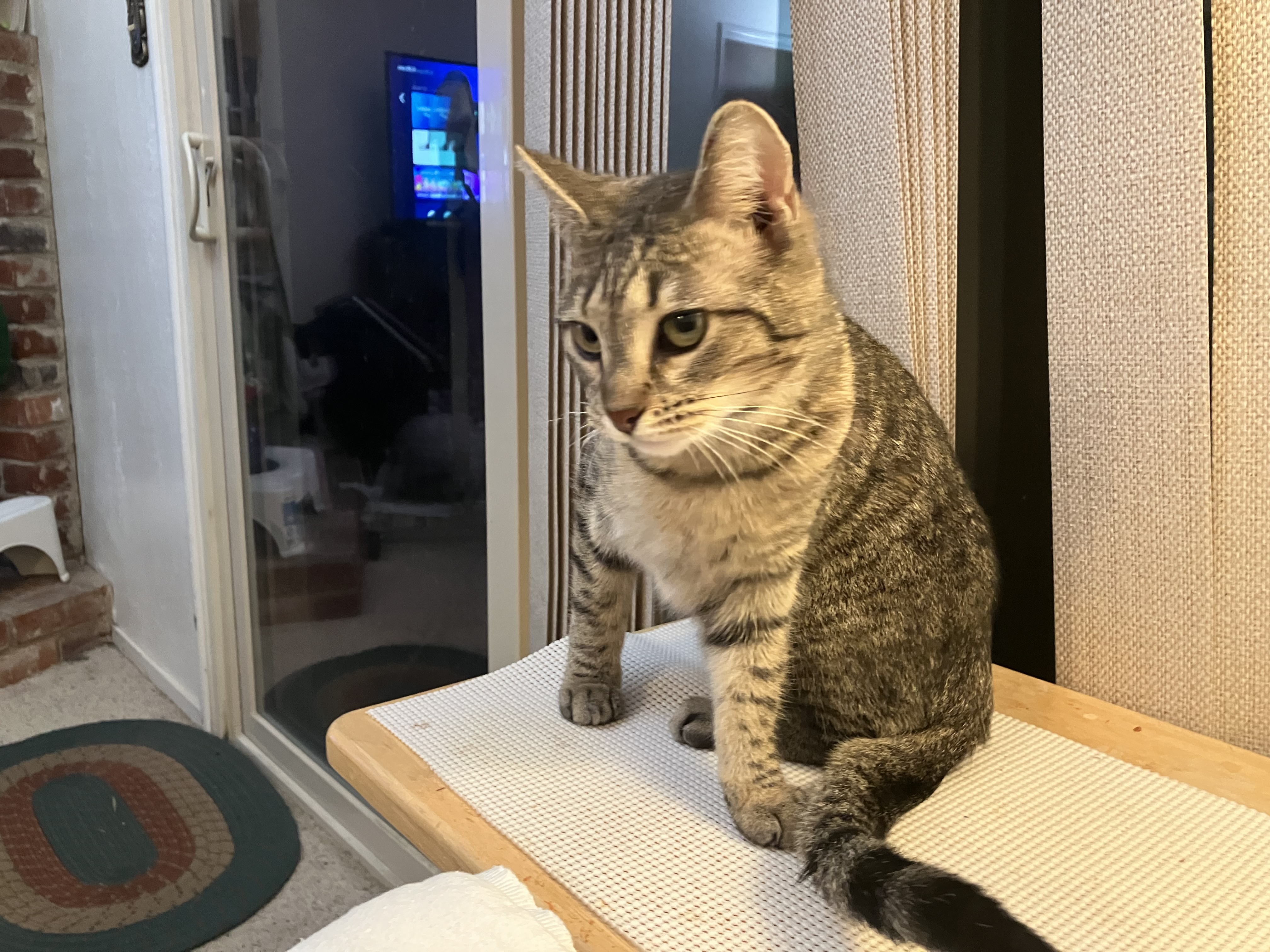
Tina my Writing Cat

Those confounded animals.

By David Joel Miller, writer, blogger, and mental health professional.

How come animals keep wandering into all my novels?

I’m working on my newest novel, and it suddenly occurred to me that another animal had wandered into my work in progress. This shouldn’t surprise me, considering the prominent role that animals have played in my life. Still, it occurred to me that inserting various species into my novels has not been a conscious choice.

Most of my life, animals have been in my house.

Some of you know my life story, at least the abbreviated version. I was born and lived the early part of my life in the Midwest, Michigan and Indiana, to be precise. I know we had a dog in the family, but that was more my parent’s animal than mine, and somehow, that creature stayed behind when we made the pilgrimage to California.

I arrived in California just in time to spend my teenage years, the 1960s, in a rural agricultural area amid apricot and prune orchards, which has since transformed into an area for growing semiconductors known as Silicon Valley.

From the very beginning, our home always had some type of pet. When my wife and I first married, we inherited the family dogs from both our families, and for the next 50 years, more or less, we always had an animal in the house.

Without a pet, the house was empty.

That cycle was finally broken between 2017 and 2018 when the last two non-human members of my household passed away. January of 2018 marked my retirement at the young age of 70. That was also the year that saw my first two books published. While the house seemed empty, I was busy adjusting to being retired and some of the many challenges that came with speeding past the milestone marking 70 years on earth. I wasn’t expecting animals to creep back into my abode.

My unconscious seems to have had a different opinion.

Somehow, without my conscious intention, an animal made its way into my very first novel. That novel, Casino Robbery, certainly drew on some of my own life experiences. I don’t think I ever thought about whether or not to include a pet in the story, but it seemed to naturally spring from the novel’s plot.

Early in the storyline, the protagonist, Arthur Mitchell, a mild-mannered accountant working at a Las Vegas casino, witnesses a robbery in which his fiancée is killed. Arthur proceeds to adopt her dog, a black Labrador named Plutus. Somehow, Plutus not only snuck into a couple of scenes in that novel but also became a regular cast member for Casino Robbery and the two succeeding Arthur Mitchell Mysteries.

Then, in Letters from the Dead, a cat shows up.

That Plutus would make friends with a cat seemed only natural. So somehow Plutus got Aspen, the cat, an audition, and on the story goes.

Hotel Hauntings includes both a dog and a cat.

Hotel Hauntings is the working title for one of the books in the Paranormal News series. Like most of my other books, the title may change when it comes time to publish. This series of books features Nancy Nusbaum, who first appeared in a time travel adventure titled Sasquatch Attacks.

In this book, Nancy encounters both a dog and a cat. I won’t give you their names now because that might change in the final editing stage. And I don’t want to spoil the book for you, but I can tell you one thing. In this book, Nancy investigates reports of ghosts at the Oaktree Hotel. One of the things she needs to discover is if dogs and cats can see ghosts, which also raises the question of whether animals who pass can also haunt a property.

Those aren’t the only animals in my books.

If you read my other books carefully, you’ll find that animals, mostly pets, get cast in various roles just like humans. So, if you go on an animal hunt in my books and have a particular favorite, please leave a comment. Just be careful not to spoil the story for someone else.

In honor of those various animal cast members, I periodically make one of the David Joe Miller books free for a day or two. So, if you’d like to catch that offer, please subscribe to this blog and make sure to read the periodic posts.

The COVID pandemic has affected Pets also.

Over the last four years, I have put off bringing home another non-human family member because of all the changes in my life. Too many changes were happening in my life to feel that I could be responsible for a dog or a cat. Recently, my subconscious has been arguing with that logic. Several nights, I had a dream about adopting, and not surprisingly, several people asked me when I would be getting another creature.

Recently I decided that the time was right to adopt another family member. With the help of a friend, I made a trip to a local animal center. Apparently, I was not the only one struggling with that decision. The local animal center had quite a selection.

We interviewed several felines and were finally selected by one who appeared anxious to adopt us. The picture above is of Tina, my new writing partner.

Staying connected with David Joel Miller.

Seven David Joel Miller Books are available now! And more are on the way.

For these and my upcoming books, please visit my Author Page – David Joel Miller

Want the latest blog posts as they are published? Subscribe to this blog.

For more information about David Joel Miller’s work in mental health, please visit the counselorssoapbox.com website.

For my videos on mental health, substance abuse, and having a happy life, please see Counselorssoapbox YouTube Video Channel

My Muse’s odd visits.

My Muse’s odd visits.
Photo courtesy of Pixabay.com

My Muse’s odd visits.

By David Joel Miller, writer, blogger, and mental health professional.

My Muse shows up at the oddest times.

Creative people, writers, in particular, are fond of talking about the Muse. Several of the more famous writers and writing coaches whose works I read describe their relationship with their Muse. I can’t say that my relationship with whatever that group of people who sparked my creativity should be called is anything like those descriptions I read in the writing textbooks. But I think, in all fairness, I should tell you a little bit about when the muse visits and how that connects with my writing and other creative endeavors.

The Muse frequently comes at inconvenient times.

I know the standard wisdom is that the best way to invite the Muse is to set a regular time for writing. My writing efforts, along with all my other endeavors, are more like binges than consistent behavior. Unfortunately, I have too many projects I want to work on, and something always gets pushed to the back burner.

My Muse likes to interrupt.

The Muse often visits when I’m working at my day job. I have learned to adapt to these sporadic visits. I know I need to stay focused on my day job. But once that idea pops into my head that what they’re describing would be a great twist for the novel I’m working on or that I should make a video about the problem they’re describing, it’s hard to get that thought out of my head and easy to lose my focus on what I am trying to do. The best solution I found for the Muse’s tendency to interrupt is to keep a pad close by and quickly write the idea down before it escapes.

The net result is that I have a large pile of notes on my desk, many of which make absolutely no sense when I read them after the Muse has come and gone.

My Muse doesn’t like my writing desk.

The Muse is much more likely to show up whenever I get up from my desk and decide to go somewhere else and do something else. One of my goals has been to become more physically active. This goal moved much higher up on my list of priorities after I had major surgery a couple of years ago. I try to walk 4 miles per day with my minimum effort set at 2 miles per day. I hope my neighbors can see in the window of my office late at night because I will keep walking up and down the hallway until I get that minimum 2 miles walked or midnight puts a stop to this foolishness.

My Muse’s preferred time to visit is when I am outside walking around. She is likely to start jabbering at me with a large number of possible ideas, and I’m trying to concentrate on walking around in large circles on my driveway and not falling down. I know walking is supposed to be an automatic habitual behavior, and for me, it usually is. But it’s hard to concentrate when the Muse is yelling in your ear. I could cope with this strange behavior on her part if you would at least stick to one subject, but she likes to suggest ideas for all kinds of unrelated creative projects. Frequently, I end up running into the house between laps around the driveway and writing those ideas on my notepad. The idea for this post started out just that way.

The Muse often brings a group of others with her.

If it were only me and the Muse, we could probably work this conflict out, but she likes to bring other people with her. As I’m completing the third lap around my large driveway, the Muse whispering in my left ear, my inner critic shows up and begins to jabber in my right ear. Frequently, he tries to talk me out of being creative and reminds me that I still have a lot of paperwork that I need to do. Of course, the spirit of cleanliness will show up about this time and remind me that I haven’t washed the breakfast dishes and the kitchen floor needs mopping. None of these other projects are things I can successfully farm out since I currently live alone.

The Muse likes to compete with my leisure time.

No matter how long I sit at the typewriter (computer) writing (dictating), the Muse doesn’t seem to want to interfere with my creativity. She does, however, come in for a visit whenever I put down the writing project and pick up one of the large stacks of books that sit on the shelf behind me, waiting to be read. It’s not that I find ideas for my writing in those books, but rather the Muse thinks I shouldn’t be allowed to enjoy reading and starts making all kinds of suggestions for totally unrelated creative projects.

So, what’s the best way to get the Muse to contribute to my creativity?

I found a couple of things that increase the probability of the Muse visiting. First, sitting down to write something every day, whether I have an idea or not. I don’t think the Muse likes to contribute to this process, but the minute I give up and go for a walk, she will show up and tell me all the things I should have written. If I rush back to the desk fast enough I can write them down before the thoughts escape.

Secondly, I find that she is more likely to show up whenever I am doing automatic, fast-thinking behaviors, like going for a walk, washing the breakfast dishes, or doing some other mundane chore. I believe that the Muse does not like to compete for my attention, so any activity that requires me to concentrate on something other than being creative discourages her visits. But any time I let my mind relax she’s likely to show up along with two or three of her friends who all want to talk to me at once. The hard part is filtering out the advice about writing from the advice about marketing and advertising.

If you have had a different experience with whatever the people are who show up and whisper to you about your creative projects, I would love to hear them. Please leave a comment below, or feel free to contact me using the contact form.

Best wishes. David Joel Miller.

Staying connected with David Joel Miller.

Seven David Joel Miller Books are available now! And more are on the way.

For these and my upcoming books, please visit my Author Page – David Joel Miller

Want the latest blog posts as they are published? Subscribe to this blog.

For more information about David Joel Miller’s work in mental health, please visit the counselorssoapbox.com website.

For my videos on mental health, substance abuse, and having a happy life, please see Counselorssoapbox YouTube Video Channel

My creative journey

Creativity
Photo courtesy of Pixabay.com

My creative journey.

By David Joel Miller, writer, blogger, and mental health professional.

I started this blog to separate out the posts I write about my writing career, my fiction books, and my other creative endeavors from my work in mental health. Just to let you know where I’m at now in this writing journey, I’ve been publishing a blog on mental health since 2011. In addition, I have self-published seven books on Amazon, and I have a YouTube channel. Being creative has not been easy, and I wanted to share a little bit with you about where I started, my struggles, and where I see myself going in the future.

There’s a difference between scribbling and writing.

The purpose of this blog post is to share a little bit with you about my writing journey. It’s taken me a long time to get to where I am, and I’m not to my final destination yet. When I mentioned some of my struggles, please don’t think that I am feeling sorry for myself or asking for sympathy. I’m frankly quite happy with all the things I’ve accomplished in my life, and I am mentioning my challenges, hoping that that will encourage you to follow your dreams the way I have followed mine.

I have always been an avid reader. As a child, I spent a lot of time alone, but books were always my constant companions. We moved a lot, and I seem to have missed out on some of the things other people say they learned in their early education. In my seventies, I’m still filling in some of those missing pieces.

My very early years are still fuzzy. Not because of any emotional trauma but because of extremely poor eyesight. At age 8, I was prescribed glasses, and suddenly, the things the teachers were writing on the blackboard became considerably clearer.

That last sentence reminds me of how much our culture has changed across my lifetime. I fully expect it will continue to change at an ever-increasing pace. So, while I write on the whiteboards at the college where I teach, my memories of childhood are inhabited by boards that were, in fact, black or sometimes dark green.

I struggled academically all the way through high school, and then suddenly, during my first semester at the community college, things changed for me. I’ve written about those struggles in the last couple of posts. While it was never diagnosed, I suspect I have more than one learning disability. Spelling remains a mystery to me. I learned to spell phonetically and can spell the same word several different ways in one sentence. Thank goodness for Grammarly, spellcheckers, and other writing programs. Without them, this blog post would be unintelligible.

Talking has always been easier than writing.

For me, talking has always been easier than writing. I participated in speech and debate in middle school and took public speaking in high school. Along the way, I became certified as a trainer in several areas and have always enjoyed teaching a class. Eventually, I decided I needed to tackle other forms of creativity, which set off my journey as a creative person.

What is a blog?

My first real exposure to modern creativity came during my graduate program to become a Marriage and Family Therapist. Some of my fellow students were discussing resources, and the word “blog” came up in the conversation. I had to ask one of my fellow students the very simple question, “What is a blog?”

I want you to know that despite my advanced age, I’ve always considered myself an early adopter of new technology. I bought one of the very first fax machines. I almost installed one of those gigantic satellite dishes, but the man who was supposed to come to give me a quote couldn’t find the house, and that satellite dish never materialized.

My first computer was a RadioShack TRS-80 model two, with a whopping 64 K of memory. My first experience with a portable phone was one of those large brick phones. Unfortunately, it proved so inconvenient that I gave up on it and delayed getting a cell phone until after I was licensed as a therapist and told that I needed one to stay in communication with the office and my clients.

I have transitioned to a smartphone and have mastered the fine art of answering texts with the help of one of my interns, who was patient in teaching me how to respond to her text messages after I told her to call me.

I tell you all of this by way of background so that you can understand how writing a blog felt like exploring a strange continent and publishing my first book was my personal equivalent to signing up to ride a rocket to the moon.

That seems like a good place to stop for today. I’ll pick up the story in my next post, and we will see where it goes from there.

If you’ve enjoyed reading this post, please give it a like or, even better, share it.

If you are wondering where my story goes from here, please subscribe to this blog.

Either way, this old guy would appreciate any encouragement you send my way. And yes, at seventy-five, I am entitled to say, “old guy.”

Staying connected with David Joel Miller.

Seven David Joel Miller Books are available now! And more are on the way.

For these and my upcoming books, please visit my Author Page – David Joel Miller

Want the latest blog posts as they are published? Subscribe to this blog.

For more information about David Joel Miller’s work in mental health, please visit the counselorssoapbox.com website.

For my videos on mental health, substance abuse, and having a happy life, please see Counselorssoapbox YouTube Video Channel