
My accidental community college enrollment.

Attending college.
Photo courtesy of Pixabay.com

My accidental community college enrollment.

By David Joel Miller, writer, blogger, and mental health professional.

My writing a book came as a surprise to almost everyone.

Growing up, I didn’t know anyone who had written a book. Most of the people I knew in my family had minimal education. The idea of going to college was nothing I had ever heard about at home. I wasn’t a particularly good student and really wasn’t sure how someone should go about getting a job and earning a living. Let me tell you how I got from a very poor student to a published author.

I wasn’t sure I was going to graduate from high school.

Looking back on my high school experience it was exceptionally positive. As an only child, I had relatively few friends. Moving two or three times a year makes it hard to maintain friendships. It was even more difficult when I was in high school. No Internet, no email, no cell phones, and no texting. I lived in a home without a television set for most of my life, so even when the kids at school talked about what was on TV, I rarely had any idea what they were talking about.

Some of that was the times. Some of that was the family I came from. Even once TVs became commonplace, my family resisted them on the grounds that this was a device invented by the devil to allow him to get easy access to the family. I would’ve invited him home for dinner if I had known how to do it.

Middle school had been a disaster. I moved from one school to another, and the new school put me into the Z lane. They designated the lanes X, Y, and Z. The presumption was that X Lane was for the smart kids and Z Lane was for kids who should compete with the monkeys for the manual labor jobs. Somehow, by calling them X, Y, and Z rather than A, B, and C, they thought they were fooling us.

I didn’t do well in the Z lane because I had no idea how to work with my hands. In shop class, I was better at breaking tools than using them. Halfway through the school year, they decided I wasn’t suited for the Z lane and transferred me to the X group. I suppose it’s possible that I had the IQ to do that work, but coming in partway through the school year, I was hopelessly behind. My classes were changed a couple of times.

By the time I got to high school, I didn’t expect much of myself.

I drifted along in high school. I really enjoyed the experience. It was the only time in my life that I started at a school and ended at the same school. Maybe I should correct that. My second time in the Master’s program was started and completed at Fresno State University, but it was a long trip from the Z lane to a Master’s degree.

The fact that I graduated from high school surprised me. Looking back, I think I was expecting too much out of myself. I didn’t need high grades to graduate, and I certainly hadn’t put much effort into getting high grades. At that point in my life, I couldn’t see how getting all A’s would make my life any better than getting all C’s.

At home, there was never any discussion of my going to college. I heard a little bit about it at school, but I never seriously considered applying to a college or university. I had been interested in being a photographer and had worked part-time for one who went to the same church we attended. It was a last-minute decision that I might be able to learn some things about photography if I went to the local community college, so I enrolled there, knowing nothing about their course offerings.

I learned later that the college I enrolled at didn’t offer a photography program. I went there for two years, taking all the general education and some business classes. Basically, I took what the counselor recommended but quickly shifted to taking whatever I was interested in. That interest certainly didn’t extend to English or writing. I was firmly convinced I had no ability in that area.

My only yardstick for comparing my own education was my father’s.

Of my four grandparents, only one had graduated from high school. That one high school graduate was my grandmother, and she died when I was still in the third grade. No one that I knew of in my family had ever attended college.

My father had attempted to go to Bible seminary and become a pastor or missionary several times, but it just never worked out. He took one or two classes at the community college but didn’t complete them. I toyed with the idea of going to Bible seminary, but by then, my faith in what I’d been taught about religion had seriously weakened.

All my parents would have helped me somewhat if I’d chosen to attend Bible school. Any support or assistance for secular education wasn’t going to happen. So, I took my chances at the local community college.

I got to the community college, and suddenly, something was very wrong.

I had struggled all through high school, and suddenly, in college, I was getting mostly A’s with a few B’s sprinkled in. I wasn’t sure what to make of this phenomenon. One thing I did know was that I avoided taking classes like English that might require writing papers. As much as possible, I tried to take classes that involved test-taking. My favorite type of test was multiple-choice, and I was almost always able to spot the correct answer hidden in the fog of wrong answers.

Gradually, my major shifted from photography and art by way of psychology and sociology to becoming a business major. I didn’t finish that first two-year degree at that time. I got married and, shortly after that, became a father. I spent the next fifty years more or less trying to earn a living and supportive family while returning to school off and on until I finally finished my A.S. Degree and then a bachelor’s degree in business.

I learned some important life lessons going through that process.

One thing I learned was that I had a lot of talents I didn’t realize were there. I didn’t get much encouragement along the way, and I had come to believe that I wasn’t very capable. Once I challenged that belief, it turned out I could accomplish much more than I had ever imagined.

I also learned that the majority of all learning, 80% by one estimate, is emotional, not intellectual. Subjects I liked I learned easily. Subjects I disliked, or once I thought I had no aptitude for, I struggled every inch of the way.

Another thing I discovered was that I had a natural curiosity and love of learning that kept pushing me along. From here, I want to tell you how that love of learning and curiosity finally resulted in my current career and becoming a published author.

Staying connected with David Joel Miller.

Seven David Joel Miller Books are available now! And more are on the way.

For these and my upcoming books, please visit my Author Page – David Joel Miller

Want the latest blog posts as they are published? Subscribe to this blog.

For more information about David Joel Miller’s work in mental health, please visit the counselorssoapbox.com website.

For my videos on mental health, substance abuse, and having a happy life, please see Counselorssoapbox YouTube Video Channel
My Career as an Illiterate Child

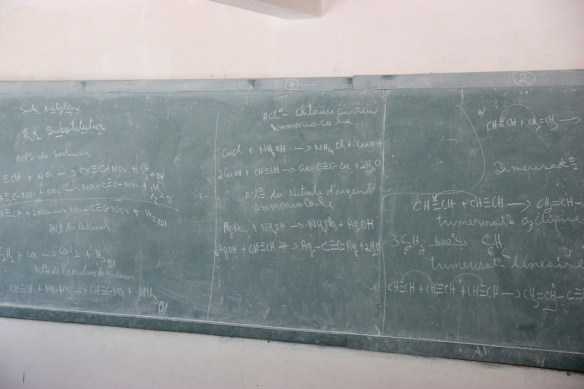
Fuzzy Blackboard – Does This Make Sense?
Photo courtesy of Pixabay.com

My Career as an Illiterate Child

By David Joel Miller, writer, blogger, and mental health professional.

My family told me I wasn’t very smart.

When I started writing this series of blog posts about my writing journey and how I became a published author, I decided I needed to say a little about my early educational experiences. I wasn’t one of those precocious kids who was always told how smart they were. In fact, I was never really encouraged in school at all. Somehow, that didn’t keep me from becoming a blogger and eventually writing and publishing my books.

The consensus in my family was that I was not very bright. In the language of those days, I might’ve been classified as mentally retarded. My family simply thought I was stupid and set very low expectations for me.

When I graduated from high school, I remember my mother telling my girlfriend they were surprised I had graduated. As I remember it, she said to that girlfriend, “his teachers used to tell me he was really smart, but I never believed them.”

I hope the story of my becoming a writer will be helpful to someone.

I’m not looking for sympathy or to place blame. Things were different back then. But from some of the tales I hear today, I think some young kids in elementary school are having experiences that are very similar to mine.

Martin Seligman, in his research, labeled it “learned helplessness.” If you’re taught that you’re not good enough or smart enough to accomplish something, most people would give up trying. I almost did that. I graduated from high school more by accident than by design.

My education got off to a very rocky start.

According to my mother, by the time I completed high school, I had attended twenty-two different schools. I often had the experience of moving to a new school district and finding out that the lesson I was about to learn in my old school had already been completed at my new school. These frequent moves and changes in curriculum resulted in some severe gaps in my learning, especially in the area of English, which we then called literacy.

My spelling was atrocious. I tried to offset that by using extreme creativity. At various schools, I learned bits and pieces about how to sound out a word, so rather than memorizing spelling, I sounded out each word as I went. The result was that I could and still can spell the same word multiple ways in one sentence.

In my forties and fifties, I did some genealogical research about my family and discovered that a few of my ancestors came over on the Mayflower. I read the early accounts by one of the colony’s governors and discovered that my unique way of spelling words wasn’t my own invention. Before we had public education and standardized dictionaries, people spelled words however they wanted to. But in the nineteen fifties, creativity in spelling earned me the reputation of a poor learner.

Our frequent moves across state lines resulted in learning multiple standard alphabets. I could never get my letters right because I couldn’t remember how they should be made in the school district I was in, and it didn’t pay to learn that since we were moving again at the end of the month.

I never understood anything the teacher wrote on the board.

Some of my teachers probably thought I was not a native English speaker. They put me right up at the front of the class so they could keep an eye on me and stop my misbehavior, but my grades improved only marginally.

Then, when I was in the third grade, maybe the beginning of the fourth, we went through a series of health examinations. The school determined I needed glasses. I remember getting that first set of glasses, and suddenly, all those squiggles on the blackboard made sense. However, I was still struggling to catch up in reading because each teacher had a different handwriting style.

My vision suddenly went blurry again.

I didn’t have a great deal of supervision as a child. We lived in rural areas and small towns. At least, that’s the way I remember it. I was an only child, and my parents were preoccupied with their own challenges. I remember walking around town without supervision from my earliest days. I don’t ever remember being driven to school. I always either walked or rode my bike. I did things in the first and second grades that parents wouldn’t let their teenagers do these days.

I remember in third grade, right after I got my glasses, walking down the street and around the block to a park. I went there by myself and hung out for a while. My recollection is that the glasses were bothering me, and I took them off and set them on the ground next to me.

When I got up to go home, I forgot all about wearing glasses. Once I returned to the house, my family had a fit, and we went back to the park. Fortunately, we found those glasses sitting right where I had placed them next to that old tree. As a result, I am never far from my glasses. I put them on before I get out of bed in the morning and often wait to take them off until I lie down again. Habits learned early in life tend to persist.

I accidentally discovered how to read.

Just about the time that I got my glasses, one of my teachers took us on a field trip to the school library. I don’t recall having seen or heard of a library before that. Reading was really not a family activity. The only book in the house was a Bible, which was not something a child was allowed to handle.

While the other students in my class were picking their books and checking them out, I aimlessly wandered around the library, looking at the books covers with no idea how to pick one. With almost everyone else gone and headed back to class, my teacher grew frustrated with me. She walked over to a bookcase and pulled out a book. She handed it to me and said, “Here, check this one out.”

That book was Laura Engel Wilder’s Little House on the Prairie. I read it late in the nineteen fifties. I went on to read every book I could find that she had never written. Through all those frequent moves, I had very few human friends, no siblings, and never a pet, but the one thing that was my constant companion was the books.

Through most of elementary school and middle school, I read every day. Before class, during my lunch hour, and after school when I got home. I didn’t bother to do my homework. What was the point? I didn’t think I was bright enough to be able to do it correctly.

But the one thing I knew for sure was how to be transported to other worlds by reading those stories. That talent for daydreaming came in handy when I decided to write my first novel.

Staying connected with David Joel Miller.

Seven David Joel Miller Books are available now! And more are on the way.

For these and my upcoming books, please visit my Author Page – David Joel Miller

Want the latest blog posts as they are published? Subscribe to this blog.

For more information about David Joel Miller’s work in mental health, please visit the counselorssoapbox.com website.

For my videos on mental health, substance abuse, and having a happy life, please see Counselorssoapbox YouTube Video Channel
Getting back up on the proverbial writing horse.

David Joel Miller, Writer

Getting back up on the proverbial writing horse.

By David Joel Miller, writer, blogger, and mental health professional.

Time to try to restart my writer’s blog.

I hope you recognize the expression. Getting back up on the horse was a saying that comes from our country’s early days, the colonies, and the westward expansion. In those days, 93% of the US population, give or take a few percentage points depending on the decade, worked in agriculture. Today, it’s the other way around, with most people working in the tech sector creating products made of electrons. Intriguing how many of our idiomatic expressions come from agriculture in preindustrial days when most of the kids these days have never seen how our food is produced.

How my writing got started.

My writing career got off to a good start. First, I started writing a blog about substance abuse, mental health, and having a happy life. I was working in the substance abuse and then mental health fields at the time. That one blog briefly expanded into two blogs. Then came a nonfiction book and, eventually, a series of novels.

I’m outlining this so that you have an idea of the journey I’ve taken. Not that I’m an especially good writer yet. I have a long way to go to be the writer I want to be, but I have made some progress. They tell me that starting that first book is itself a good sign. Finishing book one is an even better sign. In future posts on this blog, I’ll tell you more about that journey. Sometimes, it helps to listen to someone else’s travel story just so you know the landscape, where the quicksand and the sheer cliffs are situated.

Over the last five years, my writing has gone essentially nowhere.

I can’t blame much of my lack of writing over the last four years on Covid. But my writing career was already slowing down even before the pandemic. Life just got hectic.

I had been teaching four different classes in the substance abuse counseling program at the local community college, and I had been teaching the class in chemical dependency for clinical counselors in a master’s program.

Suddenly, it became a frantic effort to move all these classes online. This meant learning initially to and subsequently, three separate learning platforms. Some of these classes were synchronous, meaning I needed to master running a live class section. Others of these classes were asynchronous.

For the asynchronous classes, I had to add sound to my PowerPoints and then convert them into videos so the students could watch them at any time. All of my quizzes and tests had to be converted to online versions, and of course, I had to learn to read and grade term papers in the virtual environment.

Sometimes, our personal lives get in the way of writing.

One of my family members who had been staying with me began to experience a decline in her health status. Eventually, she was placed on home hospice. In June 2023, she passed away. Having people come to your house to care for someone is a disruption. Getting up multiple times each night to care for someone who is sick is a challenge. I’m not asking for sympathy here. I’m still digesting all of these experiences, and of course, I’m still dealing with some of the elements of grief.

As if those challenges weren’t enough, a colonoscopy discovered that I had a mass in my descending colon. Between the colonoscopy, the endoscopy, the treatment, and eventually surgery, which went from three hours to over seven, it all really set me back.

I feel remarkably fortunate to have gotten through all of that, and I am incredibly thankful for the doctors and medical personnel who got me through it.

All these life experiences shifted my focus.

When you’re floundering in the swimming pool, you don’t worry about your lap time. Your primary concern is making it to one of the sides of the pool. What I had run up against was the combination of a major pandemic and many life experiences related to aging. I have noticed in my private counseling practice that I’m seeing more clients who are past retirement age, and the issues of aging are constantly on my mind. My posts about that topic will eventually appear on the counselorssoapbox.com blog, where I write about mental health issues.

I reevaluated my fiction writing.

After taking several years off from writing novels and trying to catch my breath as life accelerated, I realized my books were not as good as I wanted them to be. Recognizing that you have a lot more to learn sometimes comes just before an improvement in the quality of your work. Unfortunately, it remains to be seen if that applies to my creative endeavors.

Over the last four years, I’ve tried to learn to be a better writer.

Even as I was publishing my first seven books, I had the nagging feeling that those books weren’t as good as they could be, but I didn’t know how to fix that. So, I began taking writing classes, listening to podcasts, watching webinars, and an occasional view of the YouTube video about writing.

As a result of all that self-imposed education, I’ve learned a lot about how writing teachers teach writing. Unfortunately, that knowledge hasn’t so far impacted my own writing. I can’t tell if my writing is any better now than it used to be because, so far, I haven’t written anything other than some blog posts that are

David Joel Miller, Writer

David Joel Miller, Writer

ready for readers to evaluate.

There’s the outline of what has been going on. I plan to write more of these posts describing my journey to getting those first seven books out into the world and my efforts to write new and better books.

If you enjoyed this post, please click the like button, leave a comment, or both. And I especially appreciate any of you who subscribe to this blog. Once I get into a rhythm, I hope to post at least once a week about my life experiences and my writing journey. If you got to this point, thank you for reading.

Staying connected with David Joel Miller.

Seven David Joel Miller Books are available now! And more are on the way.

For these and my upcoming books, please visit my Author Page – David Joel Miller

Want the latest blog posts as they are published? Subscribe to this blog.

For more information about David Joel Miller’s work in mental health, please visit the counselorssoapbox.com website.

For my videos on mental health, substance abuse, and having a happy life, please see Counselorssoapbox YouTube Video Channel
Creating a blog.

Creating a blog.
photo courtesy of Pixabay

Creating a blog.

By David Joel Miller.

My writing journey began with creating a blog.

My first tentative steps along my writing journey began in 2011 with the creation of a blog. I started this journey without any clear picture of where I was going. Back in Graduate School, I had to ask one of my fellow students what a blog was.

Writing that blog served many purposes. It kept me studying the fields of therapy, counseling, life coaching, and having a happy life. It was also very useful in teaching me the process of starting with an idea and ending with a finished piece. Writing a blog has taught me a lot about creating, and it continues to do so. My efforts on the original counselorssoapbox.com blog have fluctuated, but I still enjoy creating these posts.

Here are some of my thoughts about creating a blog.

You can write the blog simply as a form of self-expression. There’s plenty of room for a blog that expresses your thoughts, but the most successful blogs seem to have a narrower scope that attracts readers with a particular interest. I believe it helps to have a more specific topic or direction.

Your first task probably should be to get clear on why you are writing the blog or what your subject will be.

Creating your blog can be simple or complicated.

I’ll describe briefly the process of setting up a blog once you have an idea of your topic, your intended audience, and the kind of content you’ll be creating. Some people get really into this. Clearly, you can have a lot of fun creating your blog. But you don’t need to be tech-savvy. Remember that if this old man could create a blog in his late 60s, almost anyone can.

Not being a tech-type person, I will use analogies here so I don’t get the details wrong and mislead you.

So, what are some things you’ll need to do to get this blog moving?

Decide where your blog is going to live.

Your blog will reside somewhere. If you already have a website, you can put your blog there. But if you’re new to this, you will probably want to house your blog on a site that specializes in blogs. I had two websites/blogs. One lived in a small house I built. And the other is housed in a condominium development called WordPress. I believe WordPress is by far the largest housing development for new blogs. I have noticed some bloggers use a variety of other sights.

Since I use WordPress, let me try to explain how I use this site. This will be an extremely simple description. I recommend you spend some time exploring the neighborhood before you decide where you want to move into. They have lots of information available and even some humans who can help you.

You create an account. You give your blog a name. They will check to make sure that someone is not already using that name. This name becomes your mailing address for information coming to your blog and going from your blog to readers. For example, my blog’s name is counselorssoapbox. The free version of that site would use the web address counselorssoapbox.wordpress.com.

You can elect to buy a web address. I purchased the web address counselorssoapbox.com, which is set up to send traffic to my location at counselorssoapbox.wordpress.com. I chose to buy the web address because I expected to use it over a long time and wanted to be sure it was mine. If you buy a blog name, you will pay a small annual fee, kind of like homeowner’s association dues. Since I bought counselorssoapbox.com, I can move to a different web neighborhood, called a “host,” If I ever wanted to.

For a while, I had a second counseling blog that resided in a planned community developed by a web hosting company. If you plan on becoming a large enterprise with multiple sites and doing e-commerce, you probably want your blog and your other web pages on your own site.

Let me tell you a little secret. I discovered it was a whole lot easier using the site hosted on WordPress.com than it was managing the self-hosted one. That second blog is now defunct.

When I decided to create a third blog specifically dedicated to my writing, I went back to WordPress and again purchased a domain name (davidjoelmillerwriter.com)

You need to pick a “theme” for your blog.

I think of the theme as the floor plan for my house. Do I need a large, brightly lit room to display my photographs, or do I need a room with lots of bookshelves and file cabinets for my papers? If you go with WordPress.com, they have a number of free “themes.” The nice thing about having my blog live in the WordPress.com housing complex is that if I change my mind about the floor plan I need, they let me move to a different “theme.” Not only did they let me move, but they moved all my stuff into the new theme for me, for free.

There are also a lot of premium floor plans (themes) that are available for a small one-time charge.

Themes can be customized.

Whether you decide on a free theme or buy a custom one, there are many options. You can change the colors, move the doors that lead from one part of your blog to another, and so on. Themes also allow you to create some storage sheds (called widgets) that you can line up along one side or at the bottom of your theme. I use some of these to store things like a list of the topics I write on and links to take readers to those topics.

If you like the idea of building your own house, you’ll love self-hosting.

Some people prefer self-hosting so that their blog is built on their own property. This allows you to do many other things with your website and blog but adds to the labor. A little secret you might want to know. If you decide to self-host, you can still use all the WordPress blueprints, which are available through WordPress.org. Keep in mind if you self-host, there with be more maintenance. If your blog lives in the WordPress.com development, they do most of the maintenance for free.

So, at this point, you have the keys to your new blog. Next, you’ll need to decide about the furnishings and where you will put them. In the next post, I want to give you some do’s and don’ts for moving into your new blog. Don’t forget, if you have questions, please ask them. Otherwise, I’ll just keep rambling on with the story of my writing journey.

This is a revised version of a post which originally appeared on counselorsoapbox.com 8/9/2018

Staying connected with David Joel Miller.

Seven David Joel Miller Books are available now! And more are on the way.

For these and my upcoming books, please visit my Author Page – David Joel Miller

Want the latest blog posts as they publish? Subscribe to this blog.

For more information about David Joel Miller’s work in mental health, please visit the counselorssoapbox.com website.

For my videos on mental health, substance abuse, and having a happy life, please see: Counselorssoapbox YouTube Video Channel
Lessons I learned from my first book.

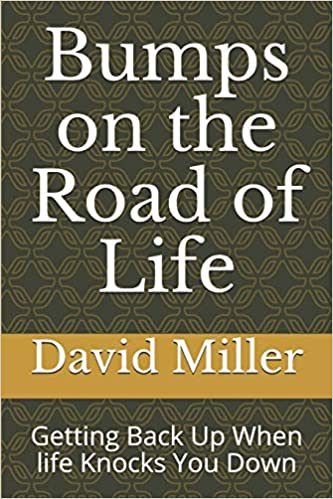
Bumps on the Road of Life

Lessons I learned from my first book.

By David Joel Miller, writer, blogger, and mental health professional.

My first attempt at writing a book came after almost seven years of writing A blog. By that point, I thought I had pretty well worked out the process of coming up with an idea, creating an outline, and writing a section. Putting that all together created a book, but it was far from the end of my writing journey.

My day job was working as a mental health counselor. Before that, I had worked as a substance use disorder counselor. I thought I had the topic of how to recover from life problems pretty well down. Transforming all those blog posts, along with some additional content, into a book proved to be a much larger challenge than I had anticipated. Here are some of the lessons I had to learn because of this endeavor.

You need to be clear who your audience is.

I tried to write my first book for as broad an audience as possible. The result was a book that didn’t quite meet the needs of anyone. My topic was bouncing back from adversity; a diagnosis professionals label as an adjustment disorder; hence the name, Bumps on The Road Of Life.

I had been told that self-help books were primarily purchased by women. That’s consistent with the way things have been in the past. Traditionally men avoided going to therapy, thinking they could tough it out and that effort and toughness would get them through life’s problems. It’s also true that 2/3 of the people who get many diagnoses are women. The majority of therapists have historically also been women.

Over the last 20 years, I’ve seen a huge increase in the number of men who have come for counseling and therapy. I’ve also seen a somewhat smaller increase in the number of male counselors and therapists.

Some of these life problems, such as career counseling issues, are drawing people to life coaches. (In the interest of full disclosure, I should mention that I went ahead and got certified as a life coach in addition to being licensed as both a marriage and family therapist and a licensed professional clinical counselor.) Since I also do clinical supervision and train new interns and associates, I also included some of the more technical material, hoping it would help them work with clients with adjustment disorders.

Somewhere in a business text, I read that if you make a product designed for everyone, no one will buy it. This is certainly true of writing a book intended for everyone. So, maybe one of these days, when I have some spare time, I’ll do a revised second edition of that first book or perhaps write a new book with a different title. But, for now, I’ve put the kindle edition on sale and moved on with my other writing endeavors.

Two drafts of a book are not enough.

I put that first book together by taking all my blog posts, rearranging them, and filling in the gaps. Then I gave it to a few friends and colleagues and asked their opinions. I got a lot of useful suggestions and completed the second draft.

Unfortunately, that’s where I stopped. After two drafts and some proofreading, I pressed the button on publish and completed that first book just days before my 70th birthday and my retirement. While that met my life goal of writing a book and publishing it, I now know it could have been significantly better if I’d spent more time polishing and revising.

You need to use beta readers.

Sometimes you get so close to the thing you’re working on you can’t see the big picture. That’s especially true in writing a book. The few readers I had on my first two books made suggestions that significantly improved the final result. But as I began to get more feedback from the copies sold, I learned that there were confusing parts and plenty of room for improvement.

Beta readers are probably even more critical when it comes to writing novels. People read fiction for fun, and many people have very specific tastes. For a book to find its audience, it must fit into people’s expectations for their favorite genre.

I’m not saying that the best books are written strictly to a formula. I’ve been reading fiction for fun ever since the 3rd grade. It’s nice to have some twists and turns. But people who read romance novels want a happily ever after, and people who read a mystery Want the protagonist to solve that mystery.

Beta readers catch things that aren’t necessarily wrong. They just don’t fit in with the rest of the story. It upsets readers when I describe a mystery in the early chapters, and then suddenly, it’s all solved at the end of the book. I know why it happened that way, but maybe I haven’t gotten it down on paper in a way that makes sense to my reader.

It takes more than one proofreading pass to catch errors.

It’s hard to catch your errors. Reading and rereading something doesn’t mean you’ll spot all your mistakes. After a while, your brain starts seeing what you want on the page, not what’s there. Even having one person proofread doesn’t mean you’ll catch all the errors. I’ve also learned that first drafts are often riddled with errors. My goal is to get what’s in my head down on paper.

When there are many errors, even the automated programs don’t catch them all. I’ve run a chapter through a spelling and grammar check and made the corrections only to find that correcting one thing in a sentence created a second error.

Sometimes ears work better than eyes.

Reading out loud can help catch spelling and grammar errors, but it can also help spot inconsistencies. For example, the character I had in chapter one with the gorgeous long blonde hair somehow was sporting an Afro later in the book.

The biggest lesson of all?

Writing a readable novel involves more than simply imagining a story in your head and getting it all down on paper. My take on this is that writing is both an art and a craft. No matter how unique and exciting the story is, it won’t hold the reader’s attention if it’s not told well.

Over the last three years, we’ve all had to adjust to the pandemic and changes in technology. I spent as much time as possible trying to keep up. The result was that I took a lot of classes on how to create things but didn’t spend the time I wanted to writing the books I had started.

I’m making 2023 a year to rekindle my creative endeavors.

Staying connected with David Joel Miller.

Seven David Joel Miller Books are available now! And more are on the way.

For these and my upcoming books, please visit my Author Page – David Joel Miller

Want the latest blog posts as they publish? Subscribe to this blog.

For more information about David Joel Miller’s work in mental health, please visit the counselorssoapbox.com website.

For my videos on mental health, substance abuse, and having a happy life, please see: Counselorssoapbox YouTube Video Channel

Those confounded animals

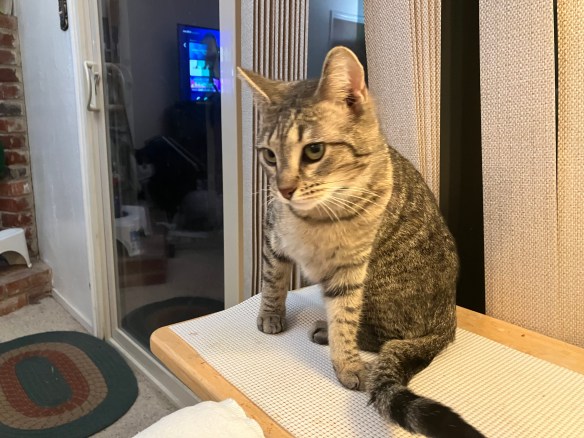
Tina – Writing Cat

Those confounded animals.

By David Joel Miller, writer, blogger, and mental health professional.

How come animals keep wandering into all my novels?

I’m working on my newest novel, and it suddenly occurred to me that another animal had wandered into my work in progress. This shouldn’t come as a surprise considering the large role that animals have played in my life. Still, it occurred to me that inserting various species into my novels has not been a conscious choice.

Most of my life, there have been one or more animals in the house.

Some of you know my life story, at least the abbreviated version. I was born and lived the early part of my life in the Midwest, Michigan and Indiana, to be precise. I know we had a dog in the family, but that was more my parent’s animal than mine, and somehow that creature stayed behind when we made the pilgrimage to California.

I arrived in California just in time to spend my teenage years, the 1960s, in a rural agricultural area amid apricot and prune orchards, which has since transformed into an area for growing semiconductors known as Silicon Valley.

From the very beginning, our home always had some type of pet. When my wife and I first married, we inherited the family dogs from both our families, and for the next 50 years, more or less, we always had an animal in the house.

Without a pet, the house was empty.

That cycle was finally broken between 2017 and 2018 when the last two non-human members of my household passed away. January of 2018 marked my retirement at the young age of 70. That was also the year that saw my first two books published. While the house seemed empty, I was busy adjusting to being retired and some of the many challenges that came with speeding past the milestone marking 70 years on earth. I wasn’t expecting animals to creep back into my abode.

My unconscious seems to have had a different opinion.

Somehow, without my conscious intention, an animal made its way into my very first novel. That novel, Casino Robbery, certainly drew on some of my own life experiences. I don’t think I ever thought about whether or not to include a pet in the story, but it seemed to naturally spring from the plot of the novel.

Early in the storyline, the protagonist, Arthur Mitchell, a mild-mannered accountant working at a Las Vegas casino, witnesses a robbery in which his fiancée is killed. Arthur proceeds to adopt her dog, a black Labrador named Plutus. Somehow Plutus not only snuck into a couple of scenes in that novel, but he went on to become a regular member of the cast for Casino Robbery and the two succeeding Arthur Mitchell Mysteries.

Then in Letters from the Dead, a cat shows up.

That Plutus would make friends with a cat seemed only natural. So somehow Plutus got Aspen, the cat, an audition, and on the story goes.

Hotel Hauntings includes both a dog and a cat.

Hotel Hauntings is the working title for the first book in the Paranormal News series. Like most of my other books, the title may change when it comes time to publish. This series of books features Nancy Nusbaum, who first appeared in a time travel adventure titled Sasquatch Attacks.

In this book, Nancy encounters both a dog and a cat. I won’t give you their names now because that might change in the final editing stage. And I don’t want to spoil the book for you, but I can tell you one thing. In this book, Nancy investigates reports of ghosts at the Oaktree Hotel. One of the things she needs to discover is if dogs and cats can see ghosts, which also raises the question of whether animals who pass can also haunt a property.

Those aren’t the only animals in my books.

If you read my other books carefully, you’ll find that animals, mostly pets, get cast in various roles just like humans. So if you go on an animal hunt in my books And have a particular favorite, please leave a comment. Just be careful not to spoil the story for someone else.

In honor of those various animal cast members, I periodically make one of the David Joe Miller books free for a day or two. So if you’d like to catch that offer, please subscribe to this blog and make sure to read the periodic posts.

The COVID pandemic has affected Pets also.

Over the last three years, because of all the changes in my life, I have put off bringing home another non-human family member. Too many changes were happening in my life to feel that I could be responsible for a dog or a cat. Recently my subconscious has been arguing with that logic. Several nights I had a dream about adopting, and not surprisingly, several people asked me when I was going to be getting another creature.

Recently I decided that the time was right to adopt another family member. With the help of a friend, I made a trip to a local animal center. Apparently, I was not the only one struggling with that decision. The local animal center had quite a selection.

We interviewed with several felines and were finally selected by one who appeared anxious to adopt us. The picture above is of Tina, my new writing partner.

Staying connected with David Joel Miller.

Seven David Joel Miller Books are available now! And more are on the way.

For these and my upcoming books, please visit my Author Page – David Joel Miller

Want the latest blog posts as they publish? Subscribe to this blog.

For more information about David Joel Miller’s work in mental health, please visit the counselorssoapbox.com website.

For my videos on mental health, substance abuse, and having a happy life, please see: Counselorssoapbox YouTube Video Channel



Becoming a book publisher

Becoming a book publisher.
Photo courtesy of Pixabay.com

Becoming a book publisher.

By David Joel Miller, writer, blogger, and mental health professional.

Seeing my first book in print.

Once I had completed my manuscript and printed out a couple of copies for friends to read, I thought the road to launching that book into the world would get easier. There were a whole lot of challenges to navigate. Had I known how much was involved, I might not have begun this journey of writing books.

Some of those challenges turned out to be logistical, and some had to do with technology. Technology is one of those creatures I love to hate. Without all this modern technology, self-publishing would have been impossible or out of my price range. But technology also involves a learning curve that, to my old, tired eyes, looks like scaling a vertical wall.

Let me walk you through some of the decisions I had to make and the technologies they had to study. I won’t presume to say master, but I did make them all work, sometimes, at least partially, the way they were supposed to.

Do things yourself or hire people?

You can do, by yourself, all of the tasks needed to turn your manuscript into a finished book and make it available for readers to purchase. You can also contract these tasks out to others. Which do you have more of time or money? I can’t say I had a whole lot of either.

If you’re like me and love learning, you probably want to do as much as possible yourself. I also didn’t have a lot of money to commit to hiring people to do things.

A title for my publishing company.

Picking a name for my publishing company turned out to be one of the easiest choices I had to make. Since I was electing to self-publish, I could pick pretty much any name I wanted as long as it wasn’t already in use and I didn’t include someone else’s name.

I came up with the name “Portal Publishing” with the idea in mind that I wanted my books to transport readers to somewhere they hadn’t been before.

Titles for my books.

As I began each book, a title would occur to me. So that is the title on the file where all my notes and early drafts reside. My first book was a nonfiction book. If I ever publish a second edition, it will get a new title.

With my second book, I shifted to writing novels, and my experience with titles in the fiction area has been quite different. That book started out with one title, but when I got it complete, the original title didn’t quite fit, and I hastily retitled it just before I pushed the self-publish button.

When I say my first book, my second book, and so on, I’m talking about the ones I ended up publishing. I would estimate there are another 6 to 10 books that either didn’t get completed or, once I finished them, I didn’t feel they were good enough to publish. Someday, maybe, I’ll take those unfinished and unpublished drafts and run them through the process of revising and editing and see if there’s something there worth publishing.

While the titles worked for me while I was writing and publishing the books, they’re probably not the best titles for selling the books. One lesson I learned from this was that I should have taken more time and picked titles that reflected their genre and that would attract readers.

Creating covers.

For my nonfiction book Bumps On The Road Of Life, I used the cover creator program in KDP for the paperback edition. When it came time to upload the reformatted book for the kindle edition, I couldn’t figure out how to reuse the cover that was on the paperback. So, I launched into learning to use Canva to create my own covers. It worked exceptionally well, and I could make it work quickly enough to use it for several more of my covers.

Mastering the mechanical part of creating a cover was quite challenging. However, that process has gotten easier to use the more I’ve done it. And, of course, all the technology has improved over the years between my first book, published in 2017, and now.

There’s a vast difference between creating a cover and creating a good one. I’m firmly convinced all my books would sell better with professional covers. Having covers that match the genre of your book is a necessity if you want your book to sell well.

Formatting manuscripts twice.

Formatting a book for publication is another specialized skill. I quickly learned that it needed to be formatted differently for e-book readers, which needs to flow, than the way it should be formatted for paperbacks. This means that every book I published had to be reformatted multiple times.

Another formatting wrinkle here. Each edition needs to have the front and back matter updated, and any links in the books must be revised. If you want to publish wide, meaning with more than one publisher, you’ll have to revise that back matter and create separate editions for each publishing company.

Writing blurbs.

There’s an art to writing good blurbs. Unfortunately, it takes time to master blurb writing. I’ve taken several classes on writing blurbs and other advertising copy, but if you want to do this well, you’ll need more training than an hour or two of webinars.

Writing back copy.

Just like blurbs, learning to write back copy is another skill to master. While these two and other instances of writing advertising copy are related, they’re not identical.

Uploading manuscripts.

Uploading manuscripts to various publishers was also a time-consuming activity. In addition, different publishers have different platforms. Had I continued to publish wide, I could easily have justified paying someone else to format and maintain my books on the various platforms.

Two reasons why I discontinued my effort to publish wide.

There’s a huge learning curve with each platform your books are available on. For someone like me who has a full-time job and some other things in my life that require my attention, I needed to spend more time focused on my writing and less on the mechanics of getting my book in front of potential buyers.

I also discovered that a significant portion of my book sales came from books I had listed exclusively on KDP. So it just made sense to me to have all my books available in kindle unlimited.

Getting people to buy the book.

It’s a great feeling to have written and published a book. I still remember the first time I sold a copy. I also remember when a student in one of my classes brought in a paperback copy of one of my books and wanted it autographed. Reaching that point is a baby step on the journey to being an author with a following.

I know I’ve covered a lot of topics in this brief series of posts. If you have questions or comments, don’t hesitate to get in touch with me.

Having just had my 75th birthday, I’m conscious that there will never be enough time to do everything I want to do. But I’m certainly not done with my writing journey. Thank you for sharing this adventure called life with me.

Staying connected with David Joel Miller.

Seven David Joel Miller Books are available now! And more are on the way.

For these and my upcoming books, please visit my Author Page – David Joel Miller

Want the latest blog posts as they publish? Subscribe to this blog.

For more information about David Joel Miller’s work in mental health, please visit the counselorssoapbox.com website.

For my videos on mental health, substance abuse, and having a happy life, please see: Counselorssoapbox YouTube Video Channel

The steps between polishing and publishing.

The steps between polishing and publishing.
Photo courtesy of Pixabay.com

The steps between polishing and publishing.

By David Joel Miller, writer, blogger, and mental health professional.

Once your manuscript is polished, you need to try on some other hats.

Having finished your manuscript and gotten feedback from a few friends and family, it’s very tempting to move forward with the publishing process. If your goal is to have more than a handful of close relatives read your book, there are several other steps that should occur between typing “the end” and the beginning of the publishing process.

You will need to take a break from your manuscript.

By the time you finish writing a book of any length, your brain will be getting tired, and it will become tough to see the results realistically. A personal confession here, more than once, I have published a book and then a month later came up with an idea that would have improved that book a great deal.

If you’re going to do rapid writing and publishing, you can’t sit on each book forever, but if you have enough books in your pipeline, you can let each one marinate while you work on the sequel. What you don’t want to do is go on making changes indefinitely without having someone else look at your work.

Does your manuscript need editing or proofreading?

There is lots to learn about editing and proofreading, and if you continue to self-publish, you will need to learn all about those steps. That learning begins with differentiating between editing and proofreading.

Try reading your book out loud.

No matter how many times I reread my manuscripts, I couldn’t catch all the errors. The human brain tries to spare us the need to reprocess large amounts of data and make many small decisions. That’s why our brains really love creating and repeating habits.

One habit my brain has gotten into, and I’m told other people’s brains work essentially the same way, it’s my eyes see what my brain wants to be on the page rather than what I actually typed. After rereading and revising the same paragraph multiple times, my brain no longer detects the errors. One solution to this problem is to shift to a different modality.

Reading my book out loud, specifically when I read it to a family member, caused all the errors and unwieldy sentences to pop out. So I took to reading a chapter each night before bedtime to whichever family member would listen, and I made corrections in red pen as I went along.

You need several more steps between a finished manuscript and the publishing process.

Not all editing is created equal.

There are many kinds of editing. I was naive enough at first to think that anyone who gave a manuscript a good, detailed read could be an effective editor. Over the last few years, I’ve been studying editing and listening to webinars and podcasts about the writing and editing processes. A good editor can help you in many ways.

Is the story working?

To produce a quality story, I needed to learn to take my eyes off the sentence-level problems and start looking at the overarching story. I’m still working on this part of my writing craft. Having someone other than the author read the book can help you spot the areas that still need work.

A story can be improved greatly when fresh eyes examine it. Developmental editors, book coaches, and many other categories of professional readers can tell you a lot about whether your story works, whether there are plot holes, and other big-picture issues. It’s also helpful to know whether your early readers will find the story interesting and whether it meets genre expectations.

Beta readers can be extremely helpful.

I had hoped my friends and family could give me helpful feedback that would improve my writing. Turned out that most of the people I know are more film and video enthusiasts than heavy readers. I think they also wanted to spare my feelings.

Every writer who has dreams of a career producing multiple books needs to find a group of readers who appreciate the stories you’re trying to tell. Recruiting those beta readers takes time and effort.

Those beta readers are most helpful when they read the genre you plan to write. Sending your new horror thriller to a list of readers who prefer cozy mysteries isn’t likely to get you the kind of feedback you need.

There are plenty of good writing teachers and coaches who can tell you all the ins and out’s of genre. I’m still at the stage of writing where I’m experimenting with several genres. I’ll get back to you in future posts with more on genre and the beta readers I will be looking for.

Successful editing requires multiple journeys through the book.

Several writing and editing trainings I have listened to suggest that editing requires multiple passes through the book. Having tried to fix everything all at once, this is making more and more sense to me.

One approach to this editing is to make your first pass through the book, looking only at the major issues like plot and character. Next would come reviews of major structural components such as the inciting incident, the midpoint, and the climax.

Next comes smaller sections. In the beginning, I thought of this as revising one chapter at a time. I’ve learned to start thinking in terms of scenes. Some of my chapters consist of only one scene, but other chapters may include several brief scenes.

Next comes looking at the flow of the paragraphs. Imagine my surprise when I discovered that a paragraph I thought I had written between one scene and the next never got from my brain into the manuscript.

Lastly should come the sentence-by-sentence review. The word choice may vary with the author’s style and the genre.

If you reach this point, and learning all this is no small task, you’re ready to tackle all the challenges of sending your story out into the world.

Staying connected with David Joel Miller.

Seven David Joel Miller Books are available now! And more are on the way.

For these and my upcoming books, please visit my Author Page – David Joel Miller

Want the latest blog posts as they publish? Subscribe to this blog.

For more information about David Joel Miller’s work in mental health, please visit the counselorssoapbox.com website.

For my videos on mental health, substance abuse, and having a happy life, please see: Counselorssoapbox YouTube Video Channel

Turning a manuscript into a book

Turning a manuscript into a published book

Publishing
Photo courtesy of Pixabay.com

Turning a manuscript into a book.

By David Joel Miller, writer, blogger, and mental health professional.

What are you going to do with that manuscript?

My writing a book began because I had something I wanted to say. I didn’t want to be one of those people who spent my whole life saying I was going to write a book and never did. As an aside here, I think of myself as an “indoor mountain climber.” I am always looking for a new challenge to master.

My top three-character strengths are:

  1. Love of learning
  2. Creativity
  3. Curiosity.

The idea of building on your character strengths comes from the field of positive psychology. As a therapist, just treating people to get them over their depression never seems like enough. I wanted to find out what it took to have a happy, joyful, and contented life. For more of all that thinking, take a look at my mental health blog counselorsoapbox.com

So, given my top character strengths, it came naturally that I would not only want to write the book, but I would want to learn and understand the process of going from an idea to a finished product. I was hoping that some people would actually read the book.

Am I writing a nonfiction book or a novel?

I struggled with that choice for quite some time. Ultimately, I decided to do both. I took a number of the blog posts I had written about overcoming life’s problems, added some more material, did some editing, and the result was a nonfiction mental health book. Someday I’ll get back to working on nonfiction books, but that hasn’t happened yet.

I printed copies of my first nonfiction book using the printer attached to my computer, hole-punched them, and put them in binders. Then I asked a few friends to look at the book. I got some useful feedback and made some revisions. Eventually, I published that book. My biggest regrets are that I didn’t get more beta readers and do more revisions before I decided to publish. On the other hand, had I kept revising, I might never have published anything.

Next came my first novel.

While I was waiting for feedback on my nonfiction book, I started work on a novel. There are several stories behind that decision, but I’ll leave those for another post.

While finishing up the nonfiction book, I kept working on my novel. As a result, I got better at taking a book writing project from start to finish. Like most beginners in any field, I could see what I was accomplishing, but I still didn’t know what I didn’t know.

I gave copies of my first novel to a second set of friends for feedback.

Again, the feedback was helpful, and encouragement from friends felt good, but at that point, I couldn’t identify areas that needed improvement. What I did identify were all those steps that come after finally saying the book is done but before it could be available for people to purchase.

This all happened when things in the self-publishing field were changing rapidly.

My first two books were published just as CreateSpace was being folded into KDP. I quickly discovered that just because the book looked good when viewed on my computer in Microsoft Word, it didn’t look the way it should when viewed on a kindle or printed out into a paperback.

There were certainly features of the process that I struggled to learn. However, by the time I returned to using them for my subsequent books, many of those steps had changed.

Both books got their debut.

Eventually, my first two books became available as kindle editions and paperbacks. I briefly tried “going wide.” but ultimately, I decided that the right thing for me was to be exclusive with Amazon and have my books available on Kindle unlimited. While the sales aren’t huge, some months, the revenue from Kindle Unlimited reads exceeds the revenue from sales of books.

The next step in my journey was learning how to publish my books.

I’ll tell you more about that in an upcoming blog post.

Staying connected with David Joel Miller.

Seven David Joel Miller Books are available now! And more are on the way.

For these and my upcoming books, please visit my Author Page – David Joel Miller

Want the latest blog posts as they publish? Subscribe to this blog.

For more information about David Joel Miller’s work in mental health, please visit the counselorssoapbox.com website.

For my videos on mental health, substance abuse, and having a happy life, please see: Counselorssoapbox YouTube Video Channel

Polishing the manuscript

Polishing the manuscript

Polishing the manuscript,
Photo courtesy of Pixabay.com

Polishing the manuscript.

By David Joel Miller, writer, blogger, and mental health professional.

My journey from writing something to making it readable.

It’s a long process with many steps to transform that finished manuscript into a book that’s published and available for purchase. Each one of these steps has a learning curve. I’m going through the process of learning the most rudimentary parts of these steps, but I could certainly learn a great deal more.

Each one of these steps is a skill that takes time and effort to master, which is why many people elect to pay others to help with the steps along this process. I’ll briefly outline the steps I took, and maybe in the future, I’ll get back to some of these steps in greater detail.

Too much typing can be extremely hard on the body.

Back when I went to high school, and even my first go around in a Community College, typing was something delegated to secretarial students. I remember a friend in high school who majored in typing, stenography, and general secretarial skills. It seems to have worked out well for her.

Since my writing was not in my scope of duties where I was working, having someone else type up my dictated manuscript was not feasible. I learned to type mainly by looking at the keys as I went. As we adapted to entering our notes into computers, I was spending more and more time “pounding the keys.” I was able to work up quite a bit of speed writing that way, but the net result was that I, along with many of my coworkers, got to wear those annoying wrist braces used to treat carpal tunnel syndrome.

I made the shift to dictating.

I’ve been using Dragon Speak for dictation for some time. I found it had both good and problematic features. As the years have gone by, the manufacturer has improved the program, which is sometimes a good thing and sometimes not so good. The most problematic part of using any technology is the rate at which changes occur.

I find it very upsetting when buttons move around the page, and the features I could use yesterday have disappeared today. Over time, I learned enough of the features to make it work, and then lo and behold, one-morning dictation appeared as a feature in Microsoft Word. I’m still learning to use the program, but with all the writing I do, it would not be possible to type out error-free pages.

You will need to fix all those errors.

In the early days of writing my blog, a lot of posts got published full of errors. Sometimes it was the wrong word choice, and other times it was incorrect punctuation. Words like “there” and “their” slipped through in the wrong usages.

Writing a piece and then immediately posting it creates a tremendous potential for errors to slip by. Especially after working all day and writing in the evening. When your brain’s fuzzy, rereading what you have just finished writing lets a lot of errors slip through.

How do you reduce those errors?

I rely heavily on every available resource to reduce the number of errors in the pieces I write. Notice I didn’t say eliminate the errors. The more aware I have become, the more I spot errors in traditionally published books. Even using professional proofreaders, some errors slip by. The more eyes you have on the book, the more likely you are to catch mistakes.

Whatever program you’re using to write, it probably includes a spelling and grammar checker. I find this a help, but not a solution. Over the last 15 years, since I’ve been working on my writing more seriously, spell check, grammar checkers, and editing software have improved dramatically. But, remarkably, these programs don’t all agree on some of these corrections.

Learning to dictate created its own set of problems.

Typing all day at an office-type job resulted in a case of carpal tunnel syndrome. Wearing braces on my wrists helped somewhat, but it didn’t solve the whole problem, especially when I was coming home from work and “pounding the keys” late into the evening trying to finish a blog post or a chapter in a book.

I have used more than one dictation program. Unfortunately, each of them has had its problems. I know that there are writing coaches who advocate dictating as a way to speed up your word count. I have found that sometimes it does help me get my thoughts out on “paper” a lot faster. But dictation also results in introducing a lot of errors that need to be corrected. Spotting and correcting those errors sometimes takes your focus off reading the content and can introduce a lot of other errors.

One other resource I wouldn’t be without.

I don’t do a lot of heavy proofreading and editing when I’m in the writing process. I get the ideas, and I want to get them down on paper as quickly as possible. I’ve learned that there are many other steps that need to happen after I have a clean, finished first draft to turn it into something readable, even by family and friends.

One resource I do use is Grammarly. At the end of each blog post or when writing my novels after each chapter, I open up Grammarly and quickly correct the most glaring errors. There are ways to set the features so that it detects some errors and not others. I took another approach. I let it show me all the potential errors. Then I correct the ones I want to correct and leave the ones I choose not to change.

When writing dialogue, I try to give each character a different voice. Try is probably the keyword here. That means if the college professor is speaking, I correct all the errors. But if my protagonist speaks to another character, I let them have their own voice and leave unchanged some of the slang expressions they might be using.

You’d think I’d be done now, wouldn’t you?

Many more steps are required to turn this “unsanded, rough draft” into something I would want someone else to read. I’m still refining this process so it becomes the kind of automatic habit that can turn out readable manuscripts consistently. Getting those manuscripts ready for publication is another topic I’ll talk about in an upcoming blog post.

Am I planning on publishing another book?

Absolutely. I’m currently working on a series of books in which I bring back a character (Nancy Nusbaum from the Paranormal News) who appeared in one of my previous novels, and I will send her off to have a whole series of new adventures.

Staying connected with David Joel Miller.

Seven David Joel Miller Books are available now! And more are on the way.

For these and my upcoming books, please visit my Author Page – David Joel Miller

Want the latest blog posts as they publish? Subscribe to this blog.

For more information about David Joel Miller’s work in mental health, please visit the counselorssoapbox.com website.

For my videos on mental health, substance abuse, and having a happy life, please see: Counselorssoapbox YouTube Video Channel