
Lessons I learned from my first book.

Bumps on the Road of Life.
My first book

Lessons I learned from my first book.

By David Joel Miller, writer, blogger, and mental health professional.

My first attempt at writing a book came after almost seven years of writing a blog. By that point, I thought I had pretty well worked out the process of coming up with an idea, creating an outline, and writing a section. Putting that all together and creating a book turned out to be far from the end of my writing journey.

My day job was working as a mental health counselor. Before that, I had worked as a substance use disorder counselor. I thought I had the topic of how to recover from life problems pretty well down. Transforming all those blog posts, along with some additional content, into a book proved to be a much larger challenge than I had anticipated. Here are some of the lessons I had to learn because of this endeavor.

You need to be clear who your audience is.

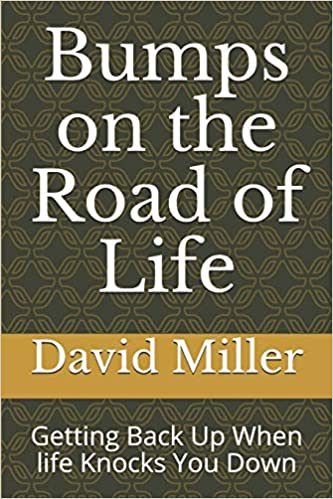
I tried to write my first book for as broad an audience as possible. The result was a book that didn’t quite meet the needs of anyone. My topic was bouncing back from adversity, a diagnosis professionals label as an adjustment disorder, hence the name Bumps on The Road of Life.

I had been told that self-help books were primarily purchased by women. That’s consistent with the way things have been in the past. Traditionally, men avoided going to therapy, thinking they could tough it out and that effort and toughness would get them through life’s problems. It’s also true that 2/3 of the people who get many diagnoses are women. The majority of therapists have historically also been women.

Over the last 20 years, I’ve seen a huge increase in the number of men who have come for counseling and therapy. I’ve also seen a somewhat smaller increase in the number of male counselors and therapists.

These life problems, such as career counseling issues, draw people to life coaches. (In the interest of full disclosure, I should mention that I went ahead and got certified as a life coach in addition to being licensed as both a Marriage and Family Therapist and a Licensed Professional Clinical Counselor.) Since I also do clinical supervision and train new interns and associates, I also included some of the more technical material, hoping it would help them work with clients with adjustment disorders.

Somewhere in a business text, I read that if you make a product designed for everyone, no one will buy it. This is certainly true of writing a book intended for everyone. So, maybe one of these days, when I have some spare time, I’ll do a revised second edition of that first book or perhaps write a new book with a different title. But, for now, I’ve put the Kindle edition on sale and moved on with my other writing endeavors.

Two drafts of a book are not enough.

I put that first book together by taking all my blog posts, rearranging them, and filling in the gaps. Then, I gave it to a few friends and colleagues and asked their opinions. I got a lot of useful suggestions and completed the second draft.

Unfortunately, that’s where I stopped. After two drafts and some proofreading, I pressed the button on publish and completed that first book just days before my 70th birthday and my retirement. While that met my life goal of writing and publishing a book, I now know it could have been significantly better if I’d spent more time polishing and revising.

You need to use beta readers.

Sometimes, you get so close to what you’re working on that you can’t see the big picture. That’s especially true in writing a book. The few readers I had asked to read my first two books made suggestions that significantly improved the final result. However, as I began to get more feedback from the copies sold, I learned that there were confusing parts and plenty of room for improvement.

Beta readers are probably even more critical when it comes to writing novels. People read fiction for fun, and many people have very specific tastes. For a book to find its audience, it must fit into people’s expectations for their favorite genre.

I’m not saying that the best books are written strictly to a formula. I’ve been reading fiction for fun ever since the 3rd grade. It’s nice to have some twists and turns. But people who read romance novels want a happily ever after, and people who read a mystery want the protagonist to solve that mystery.

Beta readers catch things that aren’t necessarily wrong. They just don’t fit in with the rest of the story. It upsets readers when I describe a mystery in the early chapters, and then suddenly, it’s all solved at the end of the book. I know why it happened that way, but maybe I haven’t gotten it down on paper in a way that makes sense to my reader.

It takes more than one proofreading pass to catch errors.

It’s hard to catch your errors. Reading and rereading something doesn’t mean you’ll spot all your mistakes. After a while, your brain starts seeing what you want on the page, not what’s there. Even having one person proofread doesn’t mean you’ll catch all the errors. I’ve also learned that first drafts are often riddled with errors. My goal is to get what’s in my head down on paper.

When there are many errors, even the automated programs don’t catch them all. I’ve run a chapter through a spelling and grammar check and made the corrections only to find that correcting one thing in a sentence created a second error.

Sometimes, ears work better than eyes.

Reading out loud can help catch spelling and grammar errors, but it can also help spot inconsistencies. For example, the character I had in chapter one with the gorgeous long blonde hair somehow was sporting an Afro later in the book.

The biggest lesson of all?

Writing a readable novel involves more than simply imagining a story in your head and getting it all down on paper. My take on this is that writing is both an art and a craft. No matter how unique and exciting the story is, it won’t hold the reader’s attention if it’s not told well.

Over the last four years, we’ve all had to adjust to the pandemic and changes in technology. I spent as much time as possible trying to keep up. The result was that I took a lot of classes on how to create things but didn’t spend the time I wanted to on writing the books I had started.

I’m making 2024 a year to rekindle my creative endeavors.

Staying connected with David Joel Miller.

Seven David Joel Miller Books are available now! And more are on the way.

For these and my upcoming books, please visit my Author Page – David Joel Miller

Want the latest blog posts as they are published? Subscribe to this blog.

For more information about David Joel Miller’s work in mental health, please visit the counselorssoapbox.com website.

For my videos on mental health, substance abuse, and having a happy life, please see Counselorssoapbox YouTube Video Channel

When are you going to finish that book?

Bumps on the Road of Life                                      By David Joel Miller

By David Joel Miller, writer, blogger, and mental health professional.

When are you going to finish that book?

I had been struggling to write a book for several years. In fact, I tried writing various books off and on for about sixty years. But none of those books ever made it to the finish line. I could get the idea, and I could start writing, but I somehow couldn’t seem to finish the project. Maybe you’ve done that also? I thought that was all part of the process.

That “going to write a book someday” is a bit of a family tradition. I recall my father saying that he was going to write a book someday. He even took a class or two in writing. If he finished those classes, I never heard. But I do know that when he died, he hadn’t finished his book.

Then I get a nudge.

I was having lunch with a colleague. We had gone to graduate school together and tried to find time to sit down and talk about our journey toward becoming better therapists. Just to be clear, we didn’t talk about specific clients. That might violate the client’s confidentiality. But we did talk about ourselves and our struggles, both professionally and personally.

So, one day, the two of us were having lunch, and I mentioned that since I was well on my way to writing my blog, I was going back to working on my book. My friend looked me right in the eye and asked, “When are you going to finish that book?”

When am I going to finish that book?

So, I told her I didn’t know. There was still a lot to do on it. Her response startled me. “Can you promise me you will finish the book by the end of the month?” At the time, that question flabbergasted me. I thought books were supposed to take years to write.

I now know that there are writers who specialize in rapid writing and release. Writing rapidly is a skill, and it doesn’t always equate with producing a lot of usable material. NaNoWriMo is an excellent exercise for learning to write that first draft quickly. I’ll tell you about my experiences with NaNoWriMo and rapid writing in a future blog post. That experience was one of the stops on my journey, but it wasn’t the final destination.

I told my colleague that no, it wasn’t possible for me to finish the book by the end of that month. I thought that would put an end to that conversation. But she was not to be deterred so easily.

“Can you promise me you’ll finish it by the end of the year?”

That question really took me aback. At this point in my life, I was approaching seventy, and I was getting ready to put in for retirement. Something about that point in your life makes you stop and take a second look. I had to consider if I didn’t finish the book now, when would I?

One of the things I had learned from my mental health research was that as people get older and their abilities start to decline, regrets weigh on their minds. I had learned that what people regret is rarely the things they had done, even when those things had caused them problems. What many senior citizens regret are the things they’d always wanted to do but hadn’t done. While I wasn’t prepared to write myself off as a “senior citizen,” I had to consider whether I would regret never having finished that book. And the answer was a resounding yes.

I accept the challenge.

After thinking it over for a moment, I gave my friend an answer. Yes, I would finish my book by the end of the year. I took out a piece of paper that was in my pocket, my to-do list for the week, and wrote: “Finish my book” at the end of the list. I had learned from my work in substance abuse counseling that you can think about doing something, but that doesn’t make it a reality. But writing it down and telling someone else that you were going to do it really improves the chances you would take action. Since my usual habit was to cross things off my to-do list and recopy the list, I knew I was going to keep seeing that item on the list until I finished my book or gave up on it forever.

My rough draft becomes a finished manuscript.

Later that year, just before my seventieth birthday and my impending “retirement,” I finished that draft of my book. The question was, what was I going to do with the rough draft? I knew there were a lot of problems with the draft, but I just wasn’t sure what they were, so I started work on a system for polishing a first draft.

My apologies to readers who think that that’s all there is to it.

After completing that first draft, I thought I had a finished book. It turned out that the process of taking a first draft all the way to publication is a lot harder than just completing the first draft of the manuscript. You have to have a first draft, or you can’t publish anything. But as I was to learn, there were many more challenges ahead.

So far, my journey has been kind of like deciding to become a mountain climber and taking a hike from my house to the foot of the trail that leads up the mountain. Getting this far was hard, but it was only the beginning.

This is a revised version of a post which originally appeared on 12/6/22. Stay tuned for some new posts that fill in the details of my writing journey.

Staying connected with David Joel Miller.

Seven David Joel Miller Books are available now! And more are on the way.

For these and my upcoming books, please visit my Author Page – David Joel Miller

Want the latest blog posts as they are published? Subscribe to this blog.

For more information about David Joel Miller’s work in mental health, please visit the counselorssoapbox.com website.

For my videos on mental health, substance abuse, and having a happy life, please see Counselorssoapbox YouTube Video Channel

Lessons I learned from my first book.

Bumps on the Road of Life

Lessons I learned from my first book.

By David Joel Miller, writer, blogger, and mental health professional.

My first attempt at writing a book came after almost seven years of writing A blog. By that point, I thought I had pretty well worked out the process of coming up with an idea, creating an outline, and writing a section. Putting that all together created a book, but it was far from the end of my writing journey.

My day job was working as a mental health counselor. Before that, I had worked as a substance use disorder counselor. I thought I had the topic of how to recover from life problems pretty well down. Transforming all those blog posts, along with some additional content, into a book proved to be a much larger challenge than I had anticipated. Here are some of the lessons I had to learn because of this endeavor.

You need to be clear who your audience is.

I tried to write my first book for as broad an audience as possible. The result was a book that didn’t quite meet the needs of anyone. My topic was bouncing back from adversity; a diagnosis professionals label as an adjustment disorder; hence the name, Bumps on The Road Of Life.

I had been told that self-help books were primarily purchased by women. That’s consistent with the way things have been in the past. Traditionally men avoided going to therapy, thinking they could tough it out and that effort and toughness would get them through life’s problems. It’s also true that 2/3 of the people who get many diagnoses are women. The majority of therapists have historically also been women.

Over the last 20 years, I’ve seen a huge increase in the number of men who have come for counseling and therapy. I’ve also seen a somewhat smaller increase in the number of male counselors and therapists.

Some of these life problems, such as career counseling issues, are drawing people to life coaches. (In the interest of full disclosure, I should mention that I went ahead and got certified as a life coach in addition to being licensed as both a marriage and family therapist and a licensed professional clinical counselor.) Since I also do clinical supervision and train new interns and associates, I also included some of the more technical material, hoping it would help them work with clients with adjustment disorders.

Somewhere in a business text, I read that if you make a product designed for everyone, no one will buy it. This is certainly true of writing a book intended for everyone. So, maybe one of these days, when I have some spare time, I’ll do a revised second edition of that first book or perhaps write a new book with a different title. But, for now, I’ve put the kindle edition on sale and moved on with my other writing endeavors.

Two drafts of a book are not enough.

I put that first book together by taking all my blog posts, rearranging them, and filling in the gaps. Then I gave it to a few friends and colleagues and asked their opinions. I got a lot of useful suggestions and completed the second draft.

Unfortunately, that’s where I stopped. After two drafts and some proofreading, I pressed the button on publish and completed that first book just days before my 70th birthday and my retirement. While that met my life goal of writing a book and publishing it, I now know it could have been significantly better if I’d spent more time polishing and revising.

You need to use beta readers.

Sometimes you get so close to the thing you’re working on you can’t see the big picture. That’s especially true in writing a book. The few readers I had on my first two books made suggestions that significantly improved the final result. But as I began to get more feedback from the copies sold, I learned that there were confusing parts and plenty of room for improvement.

Beta readers are probably even more critical when it comes to writing novels. People read fiction for fun, and many people have very specific tastes. For a book to find its audience, it must fit into people’s expectations for their favorite genre.

I’m not saying that the best books are written strictly to a formula. I’ve been reading fiction for fun ever since the 3rd grade. It’s nice to have some twists and turns. But people who read romance novels want a happily ever after, and people who read a mystery Want the protagonist to solve that mystery.

Beta readers catch things that aren’t necessarily wrong. They just don’t fit in with the rest of the story. It upsets readers when I describe a mystery in the early chapters, and then suddenly, it’s all solved at the end of the book. I know why it happened that way, but maybe I haven’t gotten it down on paper in a way that makes sense to my reader.

It takes more than one proofreading pass to catch errors.

It’s hard to catch your errors. Reading and rereading something doesn’t mean you’ll spot all your mistakes. After a while, your brain starts seeing what you want on the page, not what’s there. Even having one person proofread doesn’t mean you’ll catch all the errors. I’ve also learned that first drafts are often riddled with errors. My goal is to get what’s in my head down on paper.

When there are many errors, even the automated programs don’t catch them all. I’ve run a chapter through a spelling and grammar check and made the corrections only to find that correcting one thing in a sentence created a second error.

Sometimes ears work better than eyes.

Reading out loud can help catch spelling and grammar errors, but it can also help spot inconsistencies. For example, the character I had in chapter one with the gorgeous long blonde hair somehow was sporting an Afro later in the book.

The biggest lesson of all?

Writing a readable novel involves more than simply imagining a story in your head and getting it all down on paper. My take on this is that writing is both an art and a craft. No matter how unique and exciting the story is, it won’t hold the reader’s attention if it’s not told well.

Over the last three years, we’ve all had to adjust to the pandemic and changes in technology. I spent as much time as possible trying to keep up. The result was that I took a lot of classes on how to create things but didn’t spend the time I wanted to writing the books I had started.

I’m making 2023 a year to rekindle my creative endeavors.

Staying connected with David Joel Miller.

Seven David Joel Miller Books are available now! And more are on the way.

For these and my upcoming books, please visit my Author Page – David Joel Miller

Want the latest blog posts as they publish? Subscribe to this blog.

For more information about David Joel Miller’s work in mental health, please visit the counselorssoapbox.com website.

For my videos on mental health, substance abuse, and having a happy life, please see: Counselorssoapbox YouTube Video Channel