
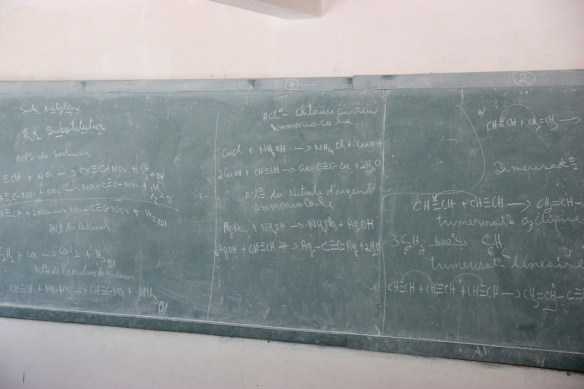
Fuzzy Blackboard – Does This Make Sense?
Photo courtesy of Pixabay.com
My Career as an Illiterate Child
By David Joel Miller, writer, blogger, and mental health professional.
My family told me I wasn’t very smart.
When I started writing this series of blog posts about my writing journey and how I became a published author, I decided I needed to say a little about my early educational experiences. I wasn’t one of those precocious kids who was always told how smart they were. In fact, I was never really encouraged in school at all. Somehow, that didn’t keep me from becoming a blogger and eventually writing and publishing my books.
The consensus in my family was that I was not very bright. In the language of those days, I might’ve been classified as mentally retarded. My family simply thought I was stupid and set very low expectations for me.
When I graduated from high school, I remember my mother telling my girlfriend they were surprised I had graduated. As I remember it, she said to that girlfriend, “his teachers used to tell me he was really smart, but I never believed them.”
I hope the story of my becoming a writer will be helpful to someone.
I’m not looking for sympathy or to place blame. Things were different back then. But from some of the tales I hear today, I think some young kids in elementary school are having experiences that are very similar to mine.
Martin Seligman, in his research, labeled it “learned helplessness.” If you’re taught that you’re not good enough or smart enough to accomplish something, most people would give up trying. I almost did that. I graduated from high school more by accident than by design.
My education got off to a very rocky start.
According to my mother, by the time I completed high school, I had attended twenty-two different schools. I often had the experience of moving to a new school district and finding out that the lesson I was about to learn in my old school had already been completed at my new school. These frequent moves and changes in curriculum resulted in some severe gaps in my learning, especially in the area of English, which we then called literacy.
My spelling was atrocious. I tried to offset that by using extreme creativity. At various schools, I learned bits and pieces about how to sound out a word, so rather than memorizing spelling, I sounded out each word as I went. The result was that I could and still can spell the same word multiple ways in one sentence.
In my forties and fifties, I did some genealogical research about my family and discovered that a few of my ancestors came over on the Mayflower. I read the early accounts by one of the colony’s governors and discovered that my unique way of spelling words wasn’t my own invention. Before we had public education and standardized dictionaries, people spelled words however they wanted to. But in the nineteen fifties, creativity in spelling earned me the reputation of a poor learner.
Our frequent moves across state lines resulted in learning multiple standard alphabets. I could never get my letters right because I couldn’t remember how they should be made in the school district I was in, and it didn’t pay to learn that since we were moving again at the end of the month.
I never understood anything the teacher wrote on the board.
Some of my teachers probably thought I was not a native English speaker. They put me right up at the front of the class so they could keep an eye on me and stop my misbehavior, but my grades improved only marginally.
Then, when I was in the third grade, maybe the beginning of the fourth, we went through a series of health examinations. The school determined I needed glasses. I remember getting that first set of glasses, and suddenly, all those squiggles on the blackboard made sense. However, I was still struggling to catch up in reading because each teacher had a different handwriting style.
My vision suddenly went blurry again.
I didn’t have a great deal of supervision as a child. We lived in rural areas and small towns. At least, that’s the way I remember it. I was an only child, and my parents were preoccupied with their own challenges. I remember walking around town without supervision from my earliest days. I don’t ever remember being driven to school. I always either walked or rode my bike. I did things in the first and second grades that parents wouldn’t let their teenagers do these days.
I remember in third grade, right after I got my glasses, walking down the street and around the block to a park. I went there by myself and hung out for a while. My recollection is that the glasses were bothering me, and I took them off and set them on the ground next to me.
When I got up to go home, I forgot all about wearing glasses. Once I returned to the house, my family had a fit, and we went back to the park. Fortunately, we found those glasses sitting right where I had placed them next to that old tree. As a result, I am never far from my glasses. I put them on before I get out of bed in the morning and often wait to take them off until I lie down again. Habits learned early in life tend to persist.
I accidentally discovered how to read.
Just about the time that I got my glasses, one of my teachers took us on a field trip to the school library. I don’t recall having seen or heard of a library before that. Reading was really not a family activity. The only book in the house was a Bible, which was not something a child was allowed to handle.
While the other students in my class were picking their books and checking them out, I aimlessly wandered around the library, looking at the books covers with no idea how to pick one. With almost everyone else gone and headed back to class, my teacher grew frustrated with me. She walked over to a bookcase and pulled out a book. She handed it to me and said, “Here, check this one out.”
That book was Laura Engel Wilder’s Little House on the Prairie. I read it late in the nineteen fifties. I went on to read every book I could find that she had never written. Through all those frequent moves, I had very few human friends, no siblings, and never a pet, but the one thing that was my constant companion was the books.
Through most of elementary school and middle school, I read every day. Before class, during my lunch hour, and after school when I got home. I didn’t bother to do my homework. What was the point? I didn’t think I was bright enough to be able to do it correctly.
But the one thing I knew for sure was how to be transported to other worlds by reading those stories. That talent for daydreaming came in handy when I decided to write my first novel.
Staying connected with David Joel Miller.
Seven David Joel Miller Books are available now! And more are on the way.
For these and my upcoming books, please visit my Author Page – David Joel Miller
Want the latest blog posts as they are published? Subscribe to this blog.
For more information about David Joel Miller’s work in mental health, please visit the counselorssoapbox.com website.
For my videos on mental health, substance abuse, and having a happy life, please see Counselorssoapbox YouTube Video Channel
 David Joel Miller Writer